
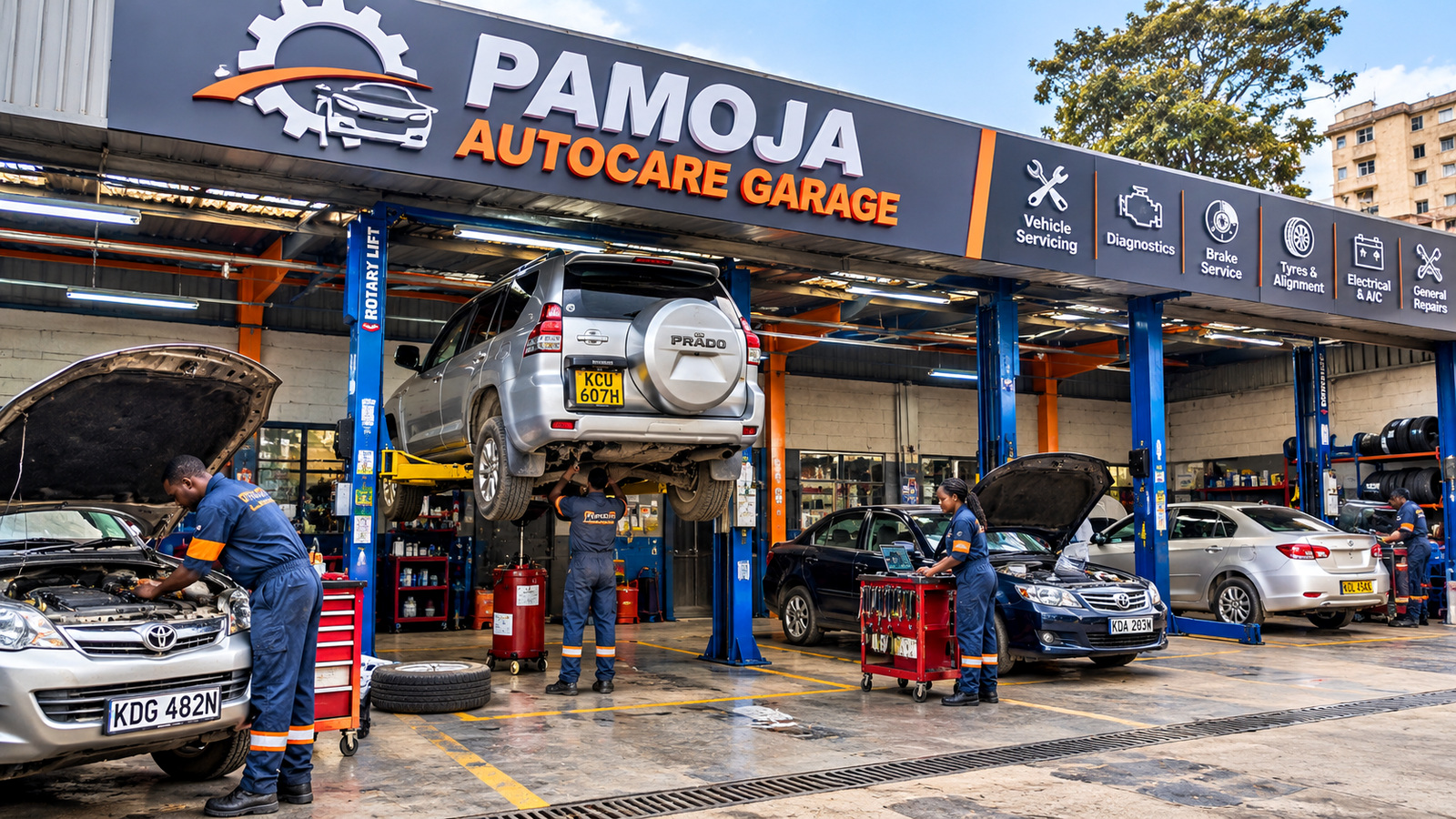
Garage Bookkeeping in Kenya is not simply counting the money that comes through a workshop till. It means knowing what each vehicle repair earned, what the replacement parts cost, what technicians and outside specialists contributed, and how much cash the garage actually collected. At Pamoja AutoCare Garage, a fictional Nairobi workshop owned by Mr. Karanja, those distinctions turn a crowded service bay into a business whose performance can be measured. With consistent records and useful financial reports, FedhaTrac can help an owner see where money is earned, delayed, or quietly lost.
A car may leave with a happy customer while the invoice remains unpaid. A busy technician can spend an afternoon resolving a difficult fault, yet the job card may show only the cost of a replacement sensor. A part purchased this morning might still be sitting on the shelf tonight. Garage Bookkeeping in Kenya connects these events so that sales, expenses, inventory, and bank balances tell the same story. The example below illustrates practical controls; Pamoja AutoCare Garage and its figures are fictional, not a claim about an actual FedhaTrac customer.
Why Garage Bookkeeping in Kenya Starts With the Repair Job
A garage performs many different kinds of work: scheduled maintenance, brake repairs, diagnostics, suspension work, tire fitting, and occasional outsourced electrical or body repairs. Each job brings its own mix of parts, technician time, outside charges, and customer payments. The job—not merely the day’s total sales—is often the most useful unit for understanding profitability.
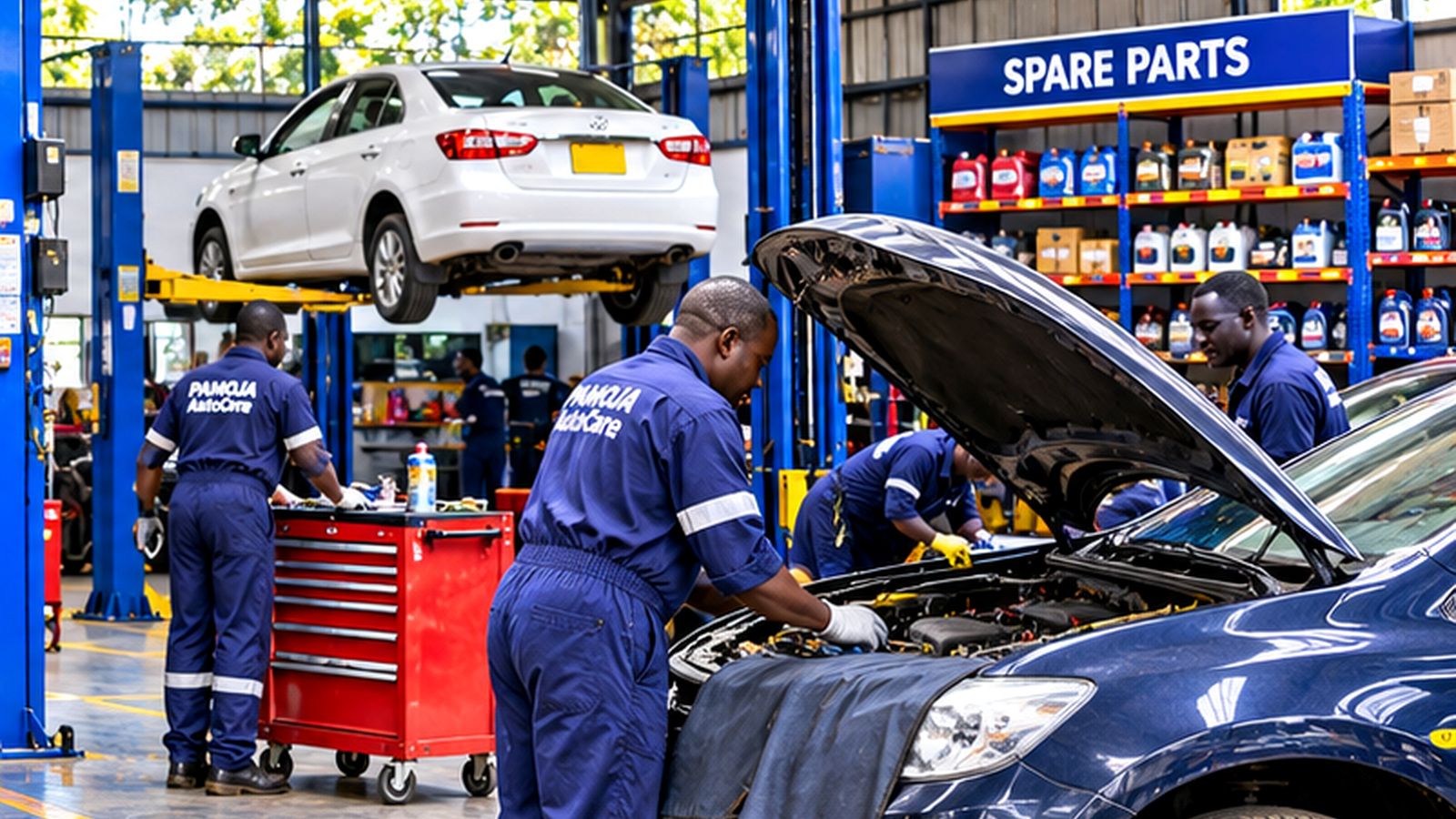
Pamoja AutoCare mechanic checking a vehicle engine and repair equipment at a Kenyan garage.
Without a common reference, a quote can sit in a WhatsApp message, parts can be purchased on a handwritten receipt, and the payment can arrive through M-Pesa several days later. The owner then sees three transactions without an easy way to prove that they belong to one repair. Garage Bookkeeping in Kenya becomes more reliable when each approved job receives a unique number that appears on the estimate, parts issue, invoice, and payment record.
Mr. Karanja’s Busy Workshop Needs Financial Visibility
At Pamoja AutoCare Garage, vehicles arrive before the first technician has finished setting up. One customer wants an oil change, another needs a brake inspection, and a fleet driver wants a quotation before approving repairs. Mr. Karanja can see that business is active. He cannot always tell whether the activity is producing enough money to cover salaries, rent, utilities, and equipment replacement.
Some customers pay deposits, while others settle on collection. Commercial accounts may request credit terms. Mechanics sometimes collect small items from nearby suppliers, and urgent jobs can require unplanned purchases. These are ordinary operating realities, but they make Garage Bookkeeping in Kenya demanding when paperwork is delayed until the end of the week.
Open a Job Card Before Work Begins
In Garage Bookkeeping in Kenya, a practical job card starts with the vehicle registration or other appropriate reference, an intake date, reported fault, initial inspection, estimated parts and labor, and the customer’s authorization. It can also note odometer readings, photographs of existing damage, parts issued, additional work approvals, and the date the vehicle was handed back. Avoid collecting unnecessary personal information; records should be accessible only to people who need them.
When a technician discovers a second problem, the extra repair should be quoted and authorized rather than disappearing into an informal conversation. A revised estimate can then be linked to the original job. Garage Bookkeeping in Kenya benefits from recording what was approved separately from what was finally done, because that makes disputes and unexplained price changes easier to investigate.
Separate Labor Revenue From Spare-Parts Sales
Customers often receive one final bill, but an owner should still be able to distinguish labor charges from spare-parts charges. Selling a brake pad is not financially identical to spending two hours installing it. Parts have purchase costs, handling and potential returns; labor has technician time, capacity limitations, and related direct costs.
Separate categories reveal whether the workshop is recovering the value of its technicians’ time or relying on parts markup to make the numbers appear healthy. Garage Bookkeeping in Kenya should capture the price charged for labor, relevant labor allocation, parts sold, parts cost, and any outsourced services linked to the job. A price reduction on one component should not hide the margin on another.
Track Spare Parts From Supplier to Service Bay
For Garage Bookkeeping in Kenya, a stock register should show the quantity of each regularly used item at the start of a period, units purchased, units issued to jobs, returns, damaged units, and the balance on hand. High-turnover items such as filters, fluids, and brake parts merit regular checks. More expensive or easily misplaced components may need tighter access controls.
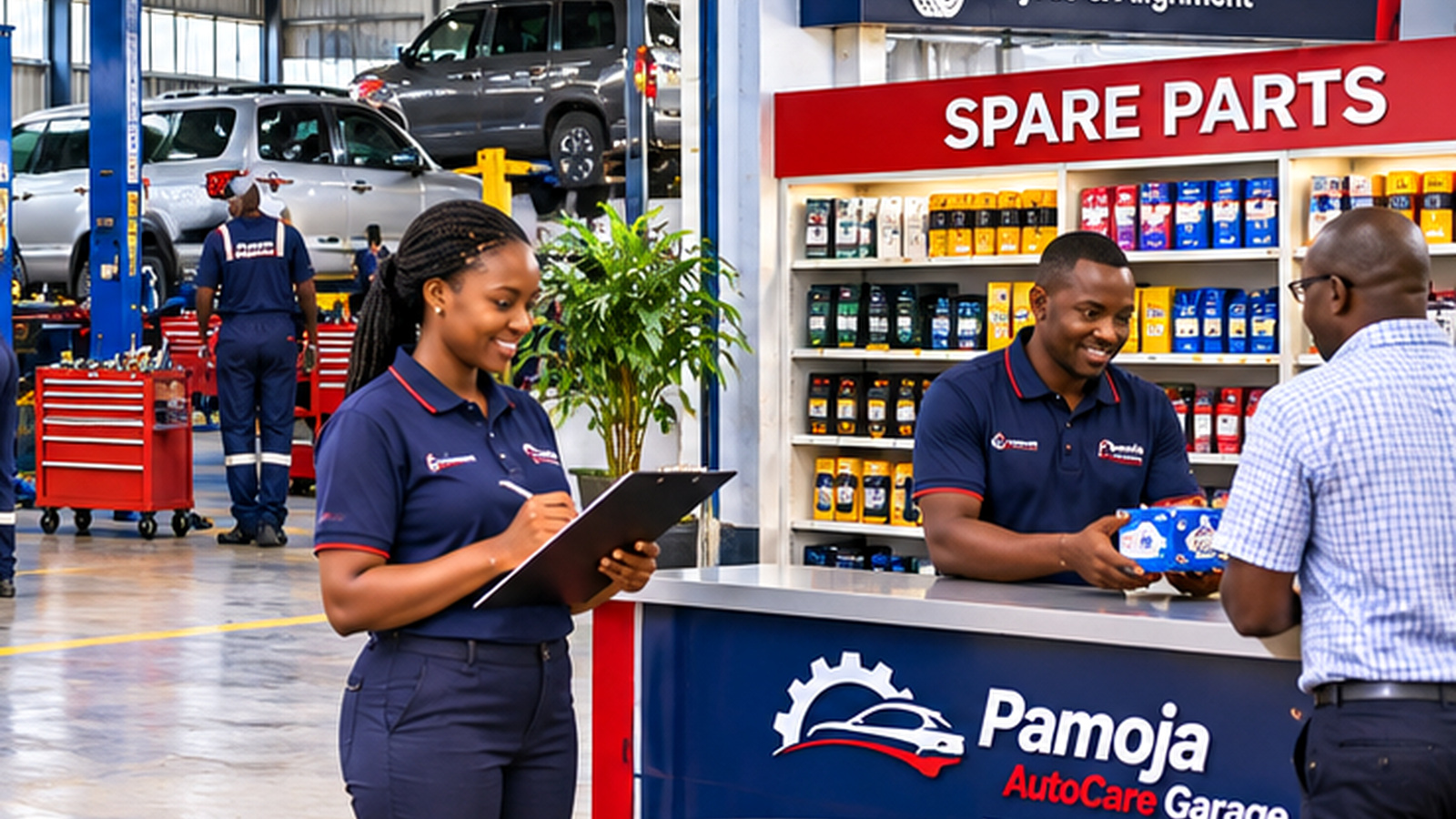
Garage storekeeper recording spare-parts stock and a parts-counter transaction at Pamoja AutoCare.
Garage Bookkeeping in Kenya must distinguish purchasing stock from consuming it. Paying KSh 40,000 for filters does not mean that all KSh 40,000 became a cost of repairs performed that day. Some items may remain available for future jobs. Records should identify which inventory was used, at an appropriate and consistently applied cost, while unsold stock remains separately tracked in the accounting records.
Consider a simple stock movement: 12 brake-pad sets were on hand, 10 were received, and seven were issued to customer jobs. The expected closing quantity is 15 sets. If a physical count finds only 13, the two-set difference needs investigation. Possible causes include a missing job issue, a recording error, a supplier discrepancy, damage, or unauthorized removal. Garage Bookkeeping in Kenya should show the variance, not quietly change the balance to make the register appear correct.
Match supplier invoices to goods received and retain return or credit-note evidence. FedhaTrac’s guide to expense tracking and invoicing in Kenya explains why documents, categories, and payments work better when connected.
Calculate the True Direct Cost of a Repair
A repair can be priced above the purchase cost of its parts yet still contribute little once direct labor and outsourced work are counted. Job costing should connect the charges to the resources actually consumed on that vehicle. Garage Bookkeeping in Kenya is most useful when the method is consistent across the month, rather than reconstructed from memory after the vehicle leaves.
A reliable contribution figure is the invoice value less the job’s direct costs. It is not the same as final net profit, because the workshop still has shared operating expenses and possibly financing or tax obligations. Mr. Karanja should also review warranty repairs, rework, and customer discounts. These activities can reduce actual margins even when the original invoice looked profitable.
A Practical Garage Bookkeeping in Kenya Job-Cost Example
Imagine job card JOB-023 for a routine brake and service visit at Pamoja AutoCare Garage. The figures below are hypothetical, stated in Kenyan shillings and excluding any tax treatment, which must be assessed separately for the actual business.
| Repair-job item | Amount (KSh) |
| Brake pads charged to customer | 8,200 |
| Oil and filter charged to customer | 5,800 |
| Air filter charged to customer | 2,000 |
| Labor for brake service, oil change, and inspection | 8,500 |
| Total job invoice | 24,500 |
| Direct parts cost | 11,400 |
| Allocated direct labor cost | 5,100 |
| Total direct costs | 16,500 |
| Job contribution before overhead | 8,000 |
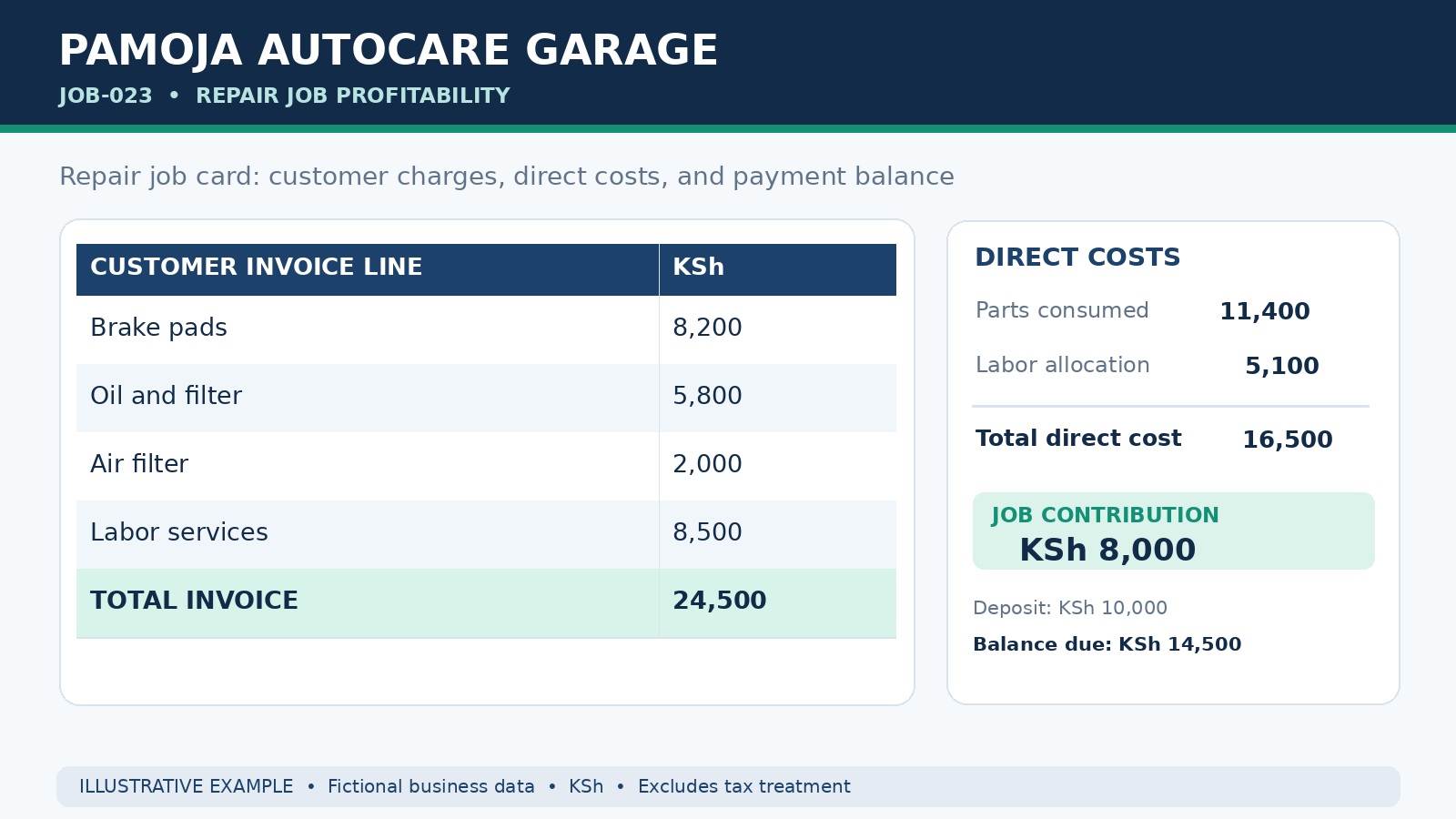
Sample garage job card showing KSh 24,500 invoice, KSh 16,500 direct costs and KSh 8,000 contribution.
If the customer pays a KSh 10,000 deposit and settles KSh 14,500 upon collection, the payments total the KSh 24,500 bill. Recording both the invoice and the later receipts as separate revenue would overstate turnover. Garage Bookkeeping in Kenya instead records the customer invoice once, tracks the deposit and balance appropriately, and matches payments against the amount owed.
The job contribution of KSh 8,000 is a useful comparison point, but it does not automatically mean Mr. Karanja took home KSh 8,000. Rent, equipment servicing, shared salaries, utilities, and other operating costs still have to be covered. A garage can use similar job summaries to identify underpriced services and unexplained cost overruns before they become recurring problems.
Reconcile M-Pesa, Cash, Card, and Bank Payments
A Nairobi garage may receive a deposit through M-Pesa, issue the invoice the next day, accept the final payment by card, and later transfer its M-Pesa balance to the business bank account. Each entry has a different purpose. The later transfer is a movement of existing funds, not another sale.

Garage service advisor reviewing repair completion and customer payment at Pamoja AutoCare.
Garage Bookkeeping in Kenya needs a daily payment summary that identifies the customer, job number, payment channel, transaction reference, and amount. The customer ledger should then show which invoices were paid, partly paid, or remain outstanding. Unmatched receipts should be researched rather than guessed, and reversals or refunds should be documented.
The same principles apply to the actual M-Pesa statement and bank feed. Transaction charges should be captured, settlement timing differences explained, and bank transfers reconciled between the relevant accounts. FedhaTrac’s M-Pesa bookkeeping guide and bank reconciliation guide offer additional practical background.
Monitor Supplier Balances, Deposits, and Credit Customers
Suppliers may allow the garage to take parts on account, while fleet clients may settle invoices after an agreed period. Those arrangements help operations continue, but they create payables and receivables that must be visible. Garage Bookkeeping in Kenya should provide a simple aging schedule: who owes the garage, how much is due, and how long the balance has been outstanding.
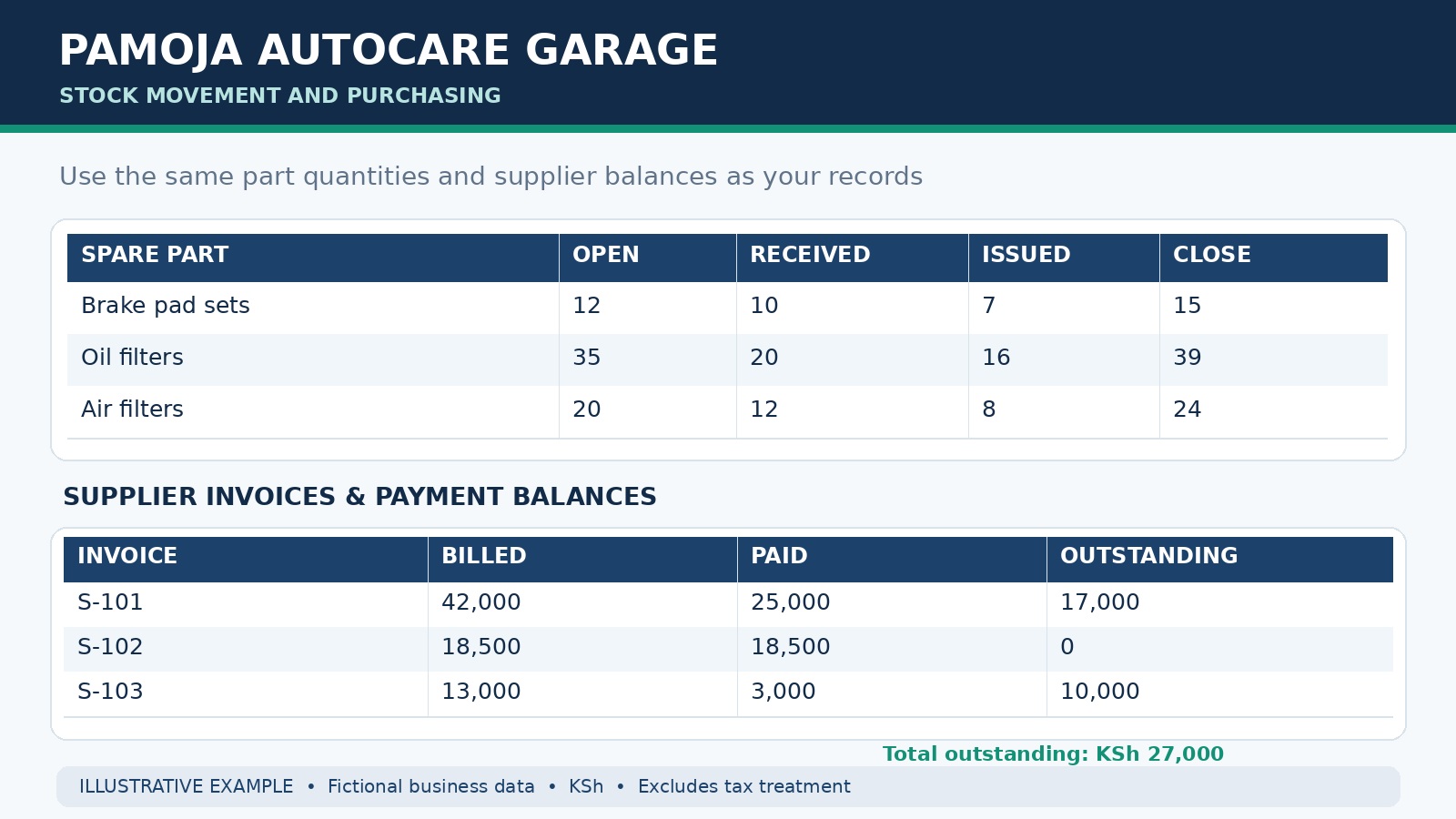
Illustrative auto garage spare-parts movement register and supplier balance schedule with reconciled quantities.
Customer deposits also deserve care. Receiving money before the service is completed does not always mean the entire amount has been earned. The accounting treatment depends on the actual transaction and the business’s reporting basis. Garage Bookkeeping in Kenya works best when the deposit is linked to its job and reflected correctly when the final invoice is issued.
Control Workshop Operating Expenses and Equipment
Not every purchase belongs to a single job. Electricity, workshop rent, cleaning supplies, internet, security, insurance, routine tool servicing, and office costs are needed to keep the business running. These operating expenses should be categorized consistently and reviewed against earlier periods or budgets.
Garage Bookkeeping in Kenya should also distinguish everyday supplies from significant equipment purchases. A diagnostic scanner or hydraulic lift may provide benefits over multiple periods and may require different accounting and tax treatment from a consumable repair material. A garage should not treat every large cash payment as an immediate operating expense without considering what was acquired.
Review Monthly Reports Instead of Guessing Profit
For Garage Bookkeeping in Kenya, a useful monthly management report brings together job-card totals, labor and parts revenue, direct costs, operating expenses, cash received, unpaid customer invoices, supplier balances, and inventory movements. Garage Bookkeeping in Kenya makes these measures comparable so the owner can see what changed and why.
In a hypothetical month, Pamoja AutoCare Garage could bill KSh 1,250,000: KSh 760,000 for parts and KSh 490,000 for labor. With direct costs of KSh 740,000, the gross contribution would be KSh 510,000. If shared operating expenses were KSh 340,000, the remaining operating surplus would be KSh 170,000 before financing charges and taxes. These are teaching figures, not actual company results.
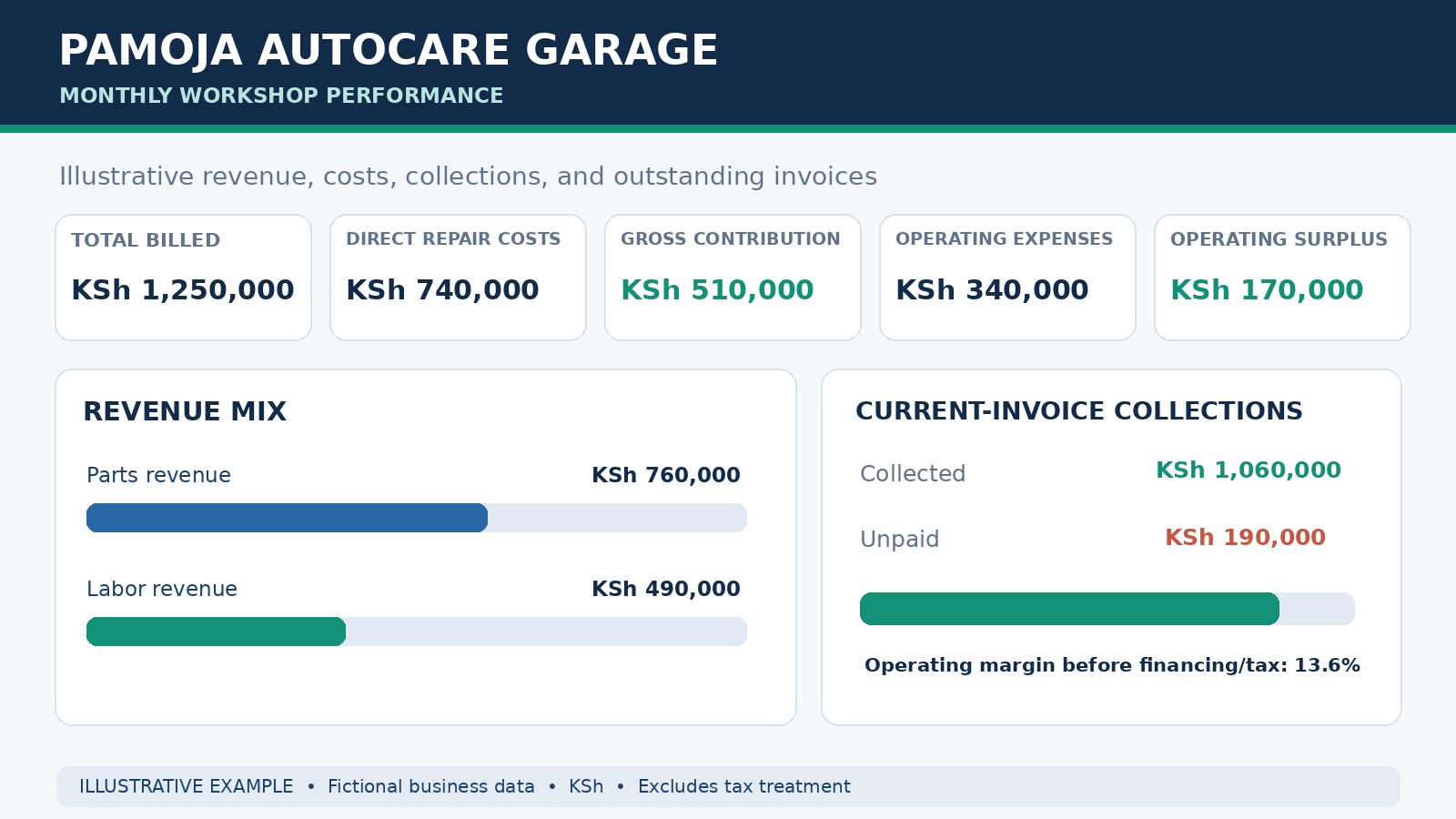
Sample monthly garage report showing revenue, direct repair costs, overhead, and current-invoice collections.
Suppose only KSh 1,060,000 of those current-month invoices was collected by month-end. The remaining KSh 190,000 would need to be traced to the outstanding customer balances, assuming no returns or adjustments. The business could therefore report an operating surplus while still facing a cash shortage. FedhaTrac’s discussion of accounting services and management reporting in Kenya provides related context.
Garage Bookkeeping in Kenya and KRA Compliance
According to the Kenya Revenue Authority’s eTIMS guidance, people carrying on business generally must onboard the electronic invoicing system and issue applicable electronic tax invoices, including businesses that are not VAT-registered. A garage’s job card and customer invoice are useful operating records, but they do not by themselves replace a compliant tax-invoicing process where one is required.
VAT registration is a separate question. Under section 34 of the VAT Act, a business generally becomes liable to register when it makes or expects taxable supplies of KSh 5 million or more within a twelve-month period, subject to the law’s conditions. Do not assume all smaller garages are automatically exempt from every invoicing or income-tax obligation, or that every garage transaction has the same VAT treatment.
KRA has also explained its validation of income and expenses in returns, including comparisons with available electronic invoicing information and stated exclusions. Business owners should retain valid invoices and other supporting records, follow the applicable exceptions, and resolve inconsistencies promptly rather than inventing expenses to balance a report. For a broader introduction, see FedhaTrac’s eTIMS guide for Kenyan businesses.
Seven Practical Controls for a Growing Auto Garage
Start and end every job with documented approval
Use a numbered job card, estimate, customer authorization, and final completion check. Garage Bookkeeping in Kenya benefits from a reliable paper trail even where conversations happen by phone or messaging.
Reconcile inventory to the repairs actually completed
Match parts issued from stock to specific vehicles. Count important stock periodically and investigate unexplained shortages before accepting adjustments.
Review technician time and outsourced charges
Record the work done, authorized hours, and relevant outside costs. This helps show whether prices recover the resources used.
Match payments to invoices instead of adding them to sales twice
Follow the invoice through deposit, final payment, refund, and bank settlement. Reconcile M-Pesa, card, bank, and cash separately.
Keep a current list of customers and suppliers who owe money
A weekly view of receivables and payables makes due dates visible and helps avoid surprises when cash is needed for urgent parts.
Compare monthly contribution with overhead
A job that covers direct costs is not necessarily profitable after the workshop’s shared costs. Garage Bookkeeping in Kenya should make that distinction easy to understand.
Assign responsibility for review and corrections
One person should prepare the records and an appropriate owner or supervisor should review unusual differences. Changes should be traceable, with an explanation and supporting evidence.
Frequently Asked Questions
What is Garage Bookkeeping in Kenya?
Garage Bookkeeping in Kenya is the organized recording and reconciliation of workshop job cards, labor revenue, parts stock, supplier bills, customer payments, and operating expenses. It helps an owner understand financial performance and maintain supporting business records.
How can a garage know whether a repair made money?
Connect the invoiced amount to the parts used, direct labor allocation, and outside services. Subtract those direct costs to find the job contribution, then review overall overhead to understand workshop profitability. Garage Bookkeeping in Kenya should make that comparison repeatable across similar jobs.
Should the owner count a customer deposit as a second sale?
No. A deposit should be connected to the original job and treated according to the transaction’s accounting basis. When a customer pays the remaining invoice balance, the payments reduce the amount outstanding; they should not duplicate the billed revenue.
Can a garage with no VAT registration ignore eTIMS?
Not generally. KRA’s public guidance requires business operators to onboard eTIMS and issue applicable electronic invoices, including non-VAT taxpayers. Specific obligations and exceptions should be checked against current KRA guidance.
How often should financial records be updated?
A busy workshop should capture job activity, payments, and parts issues as they occur, reconcile payment channels frequently, and review a complete financial summary each month. Garage Bookkeeping in Kenya is much harder when several weeks of unreferenced receipts accumulate.
How FedhaTrac Can Help Pamoja AutoCare Garage
Mr. Karanja does not need a financial report that only confirms his workshop was busy. He needs to know which repairs earned money, which invoices remain outstanding, whether the parts balance makes sense, and whether the business can afford its next major expense. These are practical questions that more consistent Garage Bookkeeping in Kenya can answer.
FedhaTrac can support the bookkeeping foundation: organizing source documents, categorizing transactions, reconciling payment channels and balances, supporting appropriate tax readiness, and preparing management information within an agreed service scope. The garage remains responsible for safe vehicle repairs, customer approvals, physical parts controls, and accurate primary records. Financial support complements those operational responsibilities; it does not replace them.
For workshop owners who want cleaner books and decisions supported by evidence, explore FedhaTrac’s bookkeeping support or contact the team through fedhatrac.com. Strong Garage Bookkeeping in Kenya will not repair an engine, but it can help make sure every completed repair contributes to a healthier business.


