
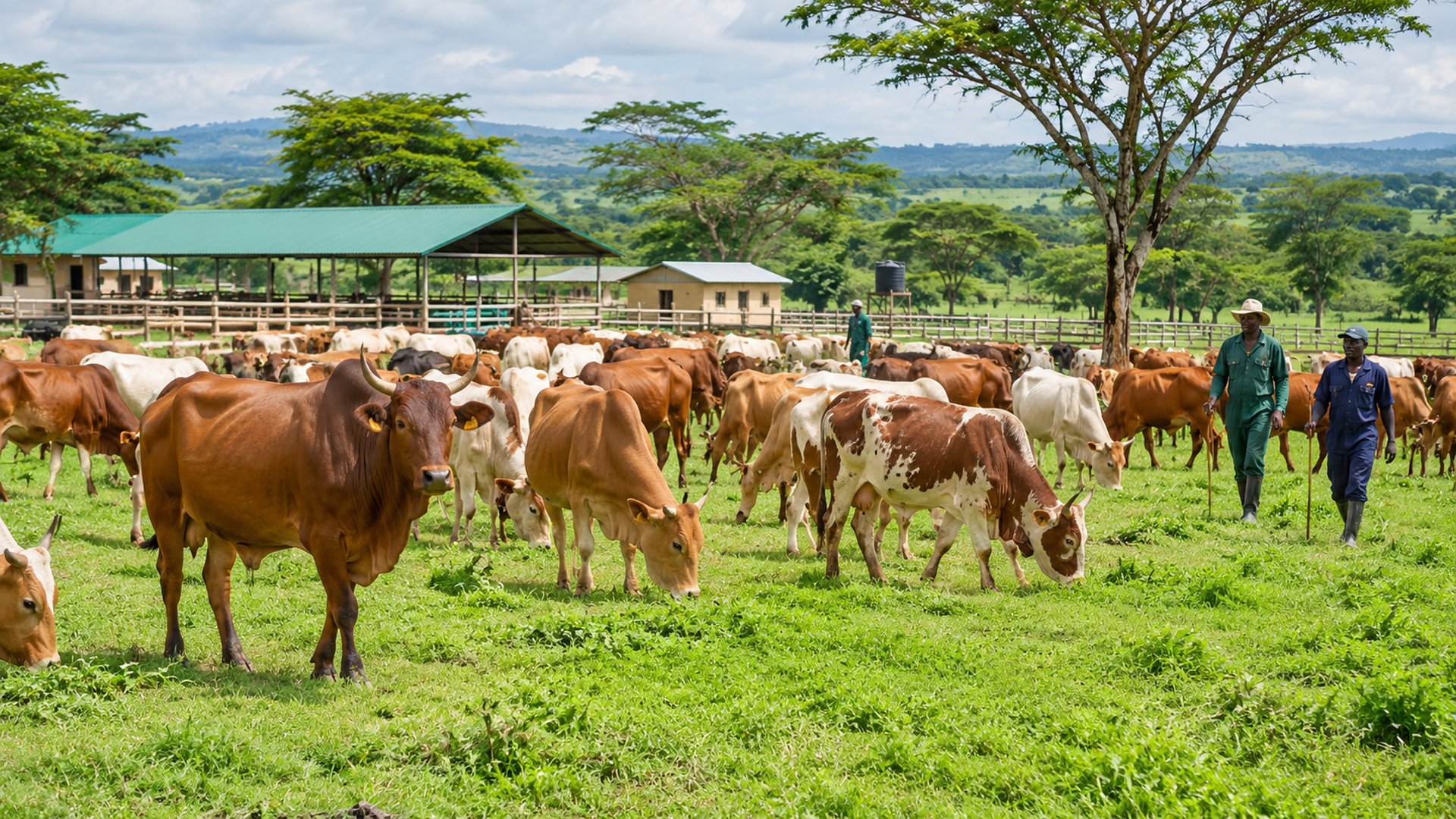
On a large cattle ranch, financial performance begins in the pasture long before an invoice is raised. A manager may see hundreds of animals grazing and still be unable to explain how many calves were born, which cattle were sold, what veterinary visits cost, or which breeding group consumed the feed budget. These are operational questions with direct financial consequences.
At FedhaTrac, we look at livestock ranch management in Kenya through reliable herd records, controlled spending, supporting sales documents and decisions about working capital. We are not veterinary practitioners or animal-identification regulators. Our contribution is to help a ranch turn authorized operational evidence into dependable financial reports. Savana Crest Ranch Ltd. is a fictional teaching example, not an existing FedhaTrac customer.
Know the actual opening and closing herd
In livestock ranch management in Kenya, An impressive herd photograph does not prove the number or value of animals in a business. A sound headcount begins with an approved opening number, then accounts for purchases, births, sales, transfers, deaths and verified closing animals. Breeding cattle, trading cattle and animals owned by other parties should not be mixed blindly in one total. The practical challenge is visible in day-to-day operations.
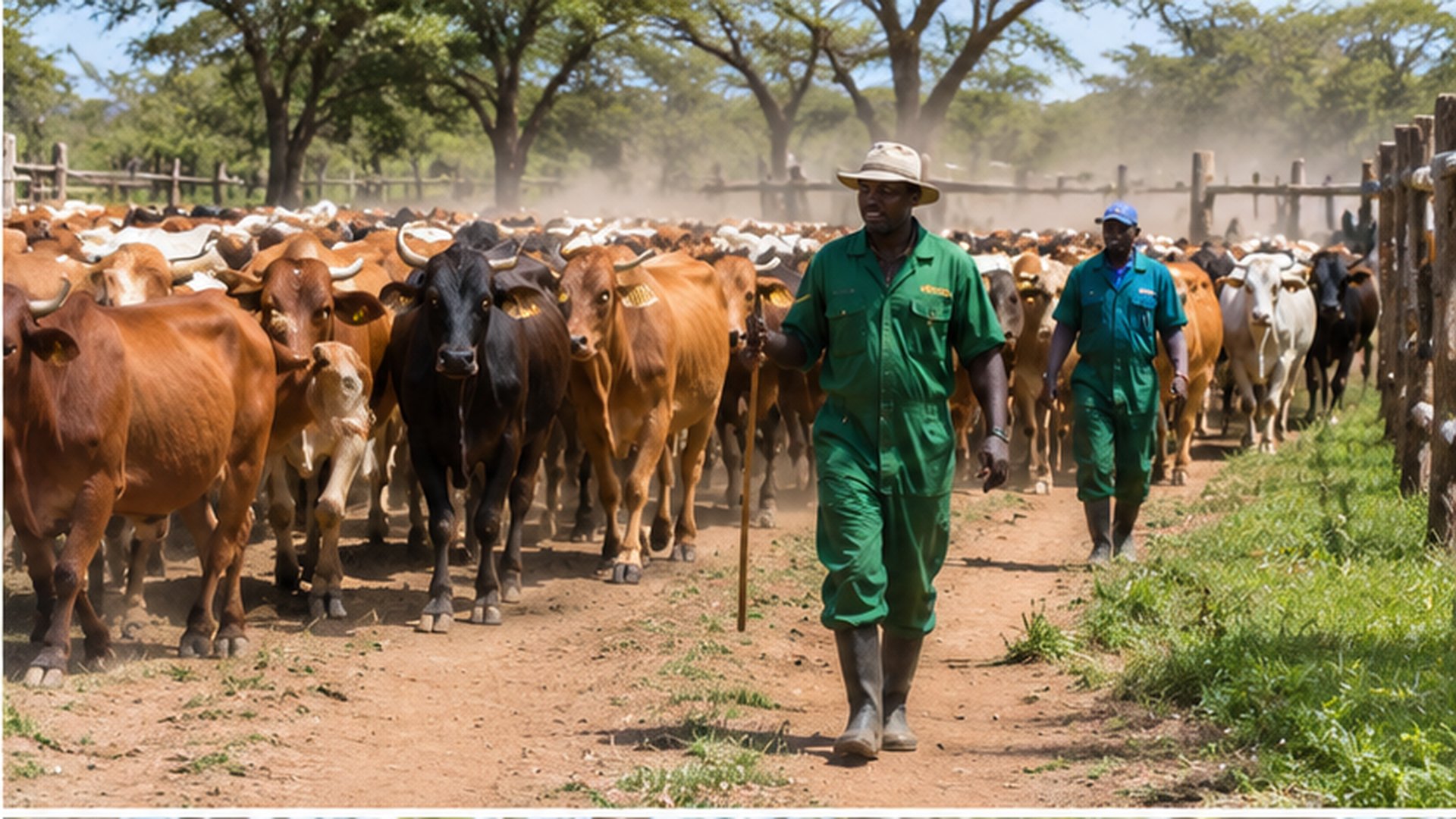
Herders moving large cattle herd for cattle ranch in Kenya
The operational routine is straightforward: Make regular physical counts by pasture or herd group, reconcile ear-tag or other operator identifiers, and sign off movement exceptions. If one animal appears in two records or a transfer lacks a destination, investigate before preparing period-end statements.
At FedhaTrac, FedhaTrac can help reconcile livestock schedules to purchases, sales, costs and supporting ledgers; ranch management still performs actual counting, tagging and animal-care supervision. In livestock ranch management in Kenya, we prefer information that can be checked back to an agreed contract, a numbered register, a genuine invoice or a banked payment, as appropriate.
Identify each animal or herd group for meaningful decisions
In livestock ranch management in Kenya, Some ranches need individual histories for breeding animals while other large commercial operations manage groups with a credible movement trail. The essential point is that records can explain which stock generated a sale or loss and which animals remain in custody. An anonymous total of cattle cannot support decisions about age, health, finishing or transport. The owner needs evidence before a small problem becomes a monthly dispute.
The operational routine is straightforward: Record species, class, origin, arrival date, identifier where used and authorized movements. Keep veterinary notes protected and available to the responsible operations team, not inserted into public marketing reports.
At FedhaTrac, Our reporting service can organize group summaries and related expense schedules without claiming that FedhaTrac directly runs livestock tags or government veterinary systems. In livestock ranch management in Kenya, we prefer information that can be checked back to an agreed contract, a numbered register, a genuine invoice or a banked payment, as appropriate.
Budget pasture, feed and water before drought hits
In livestock ranch management in Kenya, Grazing conditions change rapidly across dry and wet seasons. Purchased hay, mineral supplements, borehole servicing, tank repairs and transport can turn a promising sale into a weak margin if managers watch only gross receipts. Seasonal cash forecasts should be prepared before the ranch commits to new stock. The most useful report starts with a source document, not with an attractive chart.

Veterinary and rancher review for cattle ranch in Kenya
The operational routine is straightforward: Separate routine consumables from durable infrastructure, set cost centers for water and feed, and compare planned use with purchase receipts. Review weekly supply levels during dry spells and document large emergency purchases.
At FedhaTrac, FedhaTrac’s budgeting, financial-services and advisory capabilities help owners forecast cash needs and investigate cost variances from evidence supplied by the ranch. In livestock ranch management in Kenya, we prefer information that can be checked back to an agreed contract, a numbered register, a genuine invoice or a banked payment, as appropriate.
Treat veterinary expenditure as an accountable cost
In livestock ranch management in Kenya, Vaccination campaigns, disease surveillance, medicine purchases and veterinary visits are essential ranch activities, but their cost and evidence should be visible. Missing invoices make it difficult to assess program spending, while a financial report cannot substitute for actual treatment records or professional veterinary advice. A manager should be able to follow the movement without asking staff to reconstruct it from memory.
The operational routine is straightforward: Associate supplier invoices with approved requests, herd group or campaign, dates and proof of payment. Keep a suitable distinction between clinical treatment records and finance documents.
At FedhaTrac, We can prepare supplier schedules and management reports, while qualified veterinary personnel determine animal-health protocols and legal movement requirements. In livestock ranch management in Kenya, we prefer information that can be checked back to an agreed contract, a numbered register, a genuine invoice or a banked payment, as appropriate.
Connect livestock sale receipts to authorized movements
In livestock ranch management in Kenya, When cattle leave a ranch, a sale should link quantity, customer, agreed price, identity or group, dispatch authority and received funds. Selling forty-two animals without a reliable dispatch and customer trail invites disputes over delivery, unpaid balances and stock counts. The practical challenge is visible in day-to-day operations.

Cattle tagging and count activity for cattle ranch in Kenya
The operational routine is straightforward: Use a signed release record or equivalent auditable document with sale agreement, invoice and bank or mobile-money receipt. Check current movement permits with county or veterinary authorities for the movement being undertaken.
At FedhaTrac, FedhaTrac’s invoicing and audit-preparation support helps connect these financial records; obtaining the livestock permit and carrying animals safely remain the operator’s responsibility. In livestock ranch management in Kenya, we prefer information that can be checked back to an agreed contract, a numbered register, a genuine invoice or a banked payment, as appropriate.
Distinguish breeding assets from trading stock
In livestock ranch management in Kenya, Animals kept to breed can have a different economic purpose from cattle purchased for resale. Treating all movement as the same accounting category can distort cost of sales and biological-asset reporting. Actual recognition and valuation depend on the organization’s reporting basis and professional accounting policy. The owner needs evidence before a small problem becomes a monthly dispute.
The operational routine is straightforward: Identify the decision for each group at acquisition or birth, then document management-approved changes in use. Do not derive arbitrary cattle valuations from a social-media price quotation.
At FedhaTrac, Our team can assemble the animal movement and expenditure schedules an accountant needs for appropriate year-end reporting; we do not invent fair values or veterinary classifications. In livestock ranch management in Kenya, we prefer information that can be checked back to an agreed contract, a numbered register, a genuine invoice or a banked payment, as appropriate.
Give every ranch project a budget owner
In livestock ranch management in Kenya, New fencing, borehole extensions, dip tanks, cattle sheds and water-trough systems should be budgeted as projects rather than hidden in daily feed costs. A contractor may receive an advance long before the improvement is delivered, which creates a documentation and cash-control issue. The most useful report starts with a source document, not with an attractive chart.
Livestock ranch management in kenya — photographed herd movement register
The operational routine is straightforward: Maintain approved budgets, supplier contracts, milestones, invoices, payments, completion evidence and ownership of materials. Review variation requests before paying them and separate capital improvements from routine repairs.
At FedhaTrac, Our project financial management and audit-preparation services can prepare cost-to-complete and supporting payment schedules that make oversight easier. In livestock ranch management in Kenya, we prefer information that can be checked back to an agreed contract, a numbered register, a genuine invoice or a banked payment, as appropriate.
Assess sale margins without ignoring herd costs
In livestock ranch management in Kenya, A ranch cannot reliably declare profit by subtracting this month’s feed purchases from this month’s cattle-sale receipts. Animals sold may have accumulated purchase or rearing costs over time; unsold cattle still have financial value and may need a properly supported valuation. A manager should be able to follow the movement without asking staff to reconstruct it from memory.
The operational routine is straightforward: Calculate results using the organization’s chosen accounting method, with direct attributable costs and verified opening and closing herd quantities. Show exceptional deaths and impairment indicators distinctly rather than hiding them in routine expenses.
At FedhaTrac, FedhaTrac’s accounting and specialised reporting can make assumptions transparent, help trace relevant costs, and support discussions with an appropriately qualified accountant. In livestock ranch management in Kenya, we prefer information that can be checked back to an agreed contract, a numbered register, a genuine invoice or a banked payment, as appropriate.
Plan cash for the next season, not just the next sale
In livestock ranch management in Kenya, Livestock cash receipts are often uneven while staff wages, veterinary visits, water and feed continue. Paying today’s bills entirely from expected sales can leave the business exposed when buyer payment is delayed or movement is restricted. The practical challenge is visible in day-to-day operations. The business should be able to show how this decision affects its invoices, cash commitments and eventual financial result.
Feed and veterinary invoices on desk for cattle ranch in Kenya
The operational routine is straightforward: Set a rolling cash forecast based on verified contracts and upcoming purchases. Review receivables by buyer and evaluate emergency reserves before expanding the herd.
At FedhaTrac, Our financial-services support and management reviews translate those forecasts into practical questions for owners and managers. In livestock ranch management in Kenya, we prefer information that can be checked back to an agreed contract, a numbered register, a genuine invoice or a banked payment, as appropriate.
Review herd indicators alongside financial outcomes
In livestock ranch management in Kenya, A board report should connect biological operations with finances: opening headcount, births, mortality, sales, feed cost, veterinary spend, average price, receivables and cash. These figures are not substitutes for animal-welfare or disease reporting; they are management measures that should agree with source registers. The owner needs evidence before a small problem becomes a monthly dispute. The business should be able to show how this decision affects its invoices, cash commitments and eventual financial result.
The operational routine is straightforward: Schedule a monthly count reconciliation and quarterly financial review. Assign named staff to unresolved differences and re-check them at the next meeting.
At FedhaTrac, FedhaTrac can present reconciled financial schedules and facilitate performance discussions so the ranch acts on reliable evidence. In livestock ranch management in Kenya, we prefer information that can be checked back to an agreed contract, a numbered register, a genuine invoice or a banked payment, as appropriate.
A worked example: Savana Crest Ranch Ltd. (fictional)
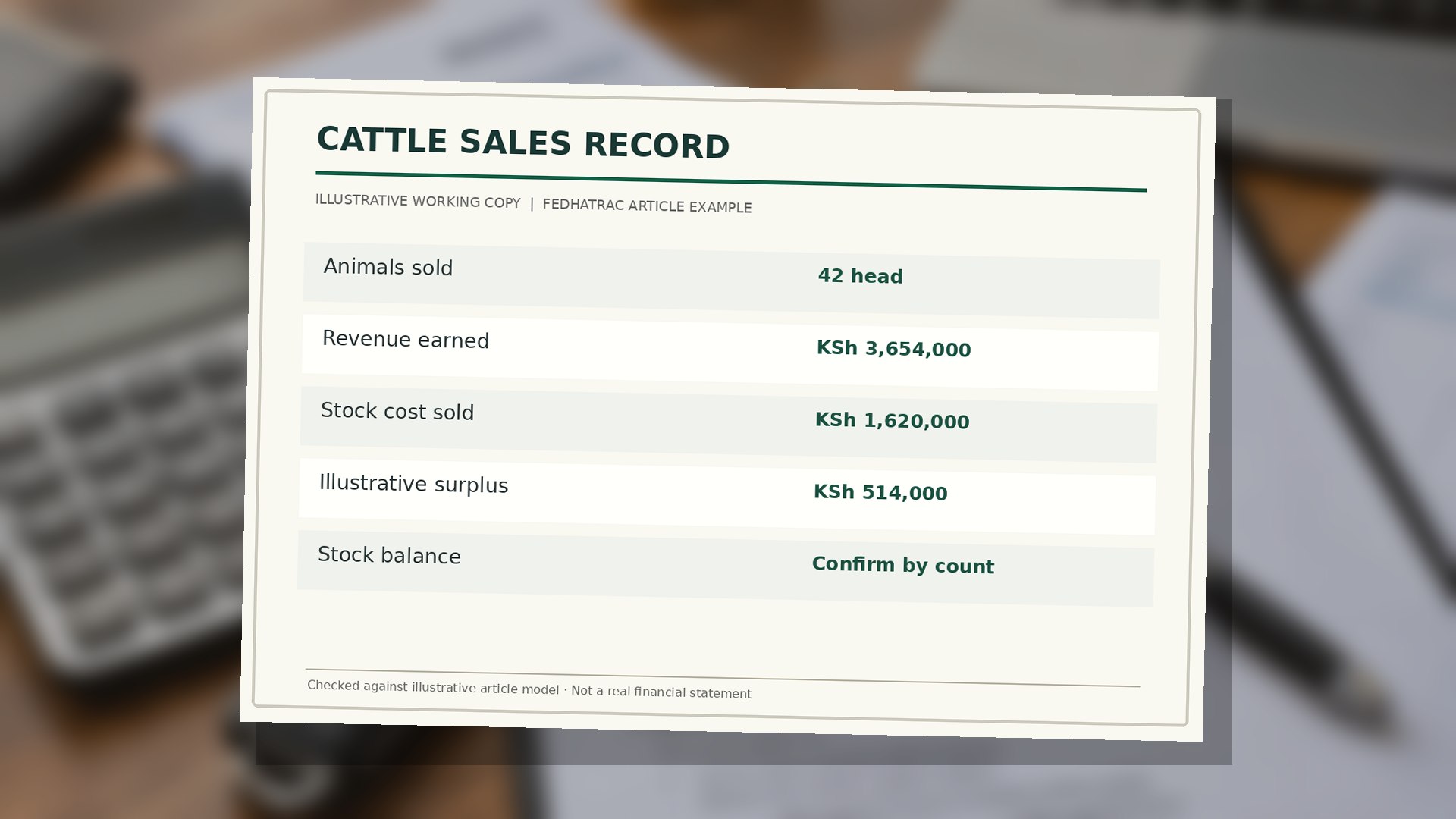
The following is an illustrative financial model for Savana Crest Ranch Ltd., a fictional cattle ranch used only to explain livestock ranch management in Kenya. It is not a report about a real FedhaTrac customer, and none of the figures should be used as industry benchmarks or quoted supplier prices.
Ranch sales and budget review papers for cattle ranch in Kenya
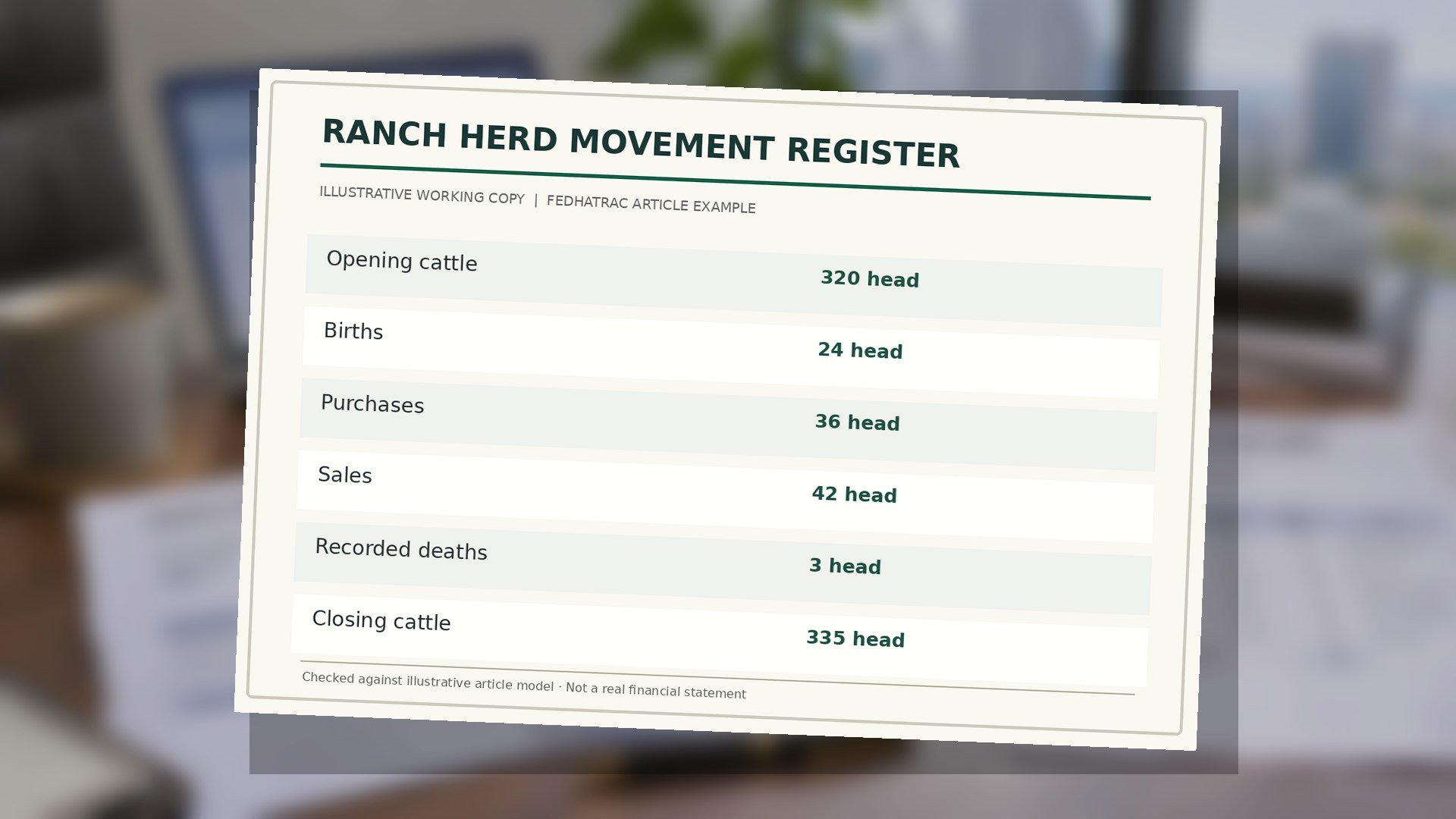
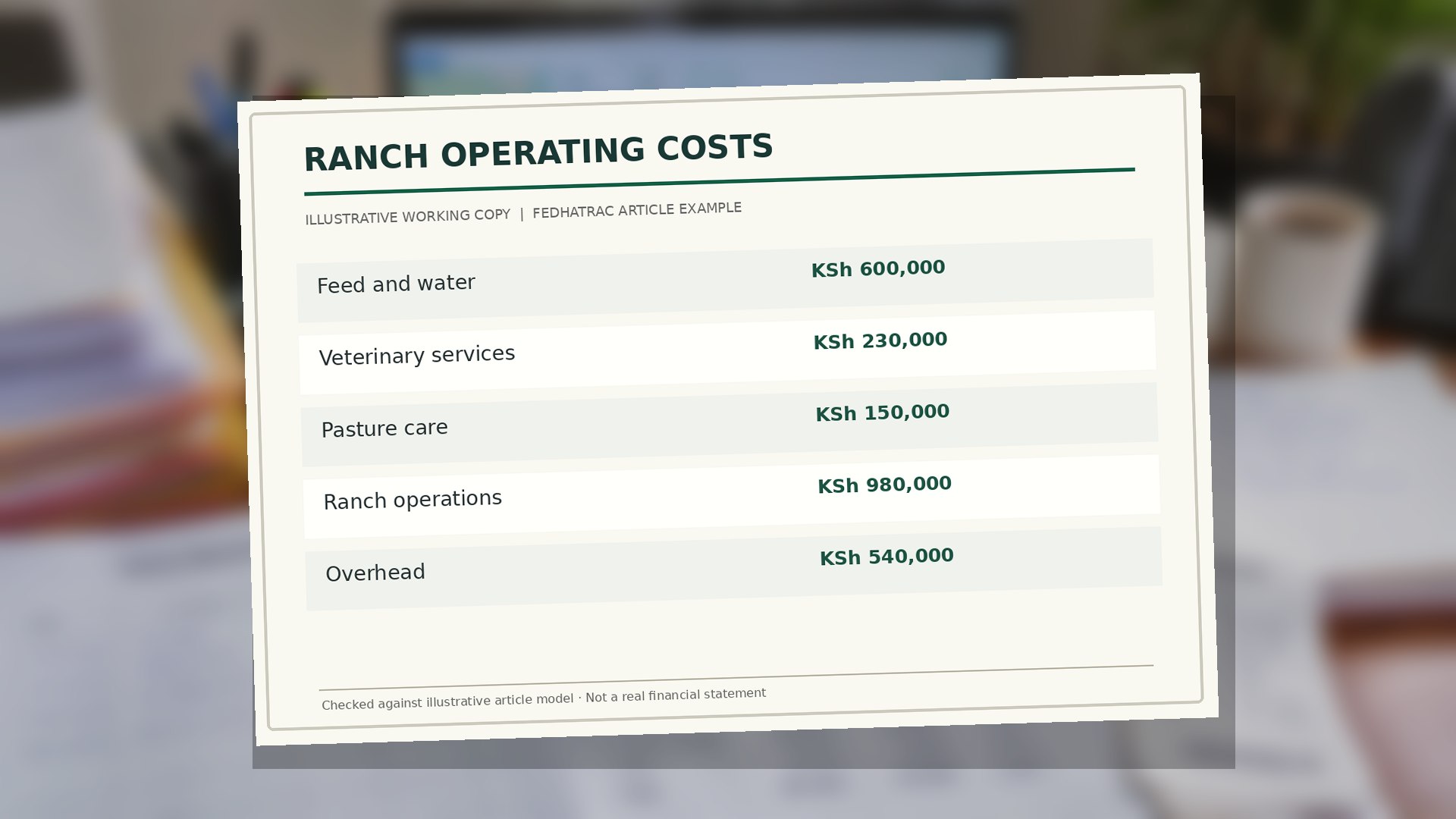
Savana Crest begins with 320 cattle, records 24 births, purchases 36, sells 42, and reports three deaths supported by ranch records. The closing headcount is therefore 335: 320 + 24 + 36 − 42 − 3. Assume 42 sales generate KSh 3,654,000 in earned revenue. The hypothetical ranch allocates KSh 1,620,000 as the carrying cost of cattle sold, KSh 980,000 in period ranch operating expenditure and KSh 540,000 in overhead, giving a simplified KSh 514,000 operating surplus before financing and tax. Those amounts are illustrative, not market-price evidence. Actual biological asset measurement, livestock losses, accounting presentation and tax treatment require the ranch’s reporting basis, verified source records and appropriate professional assessment.
The lesson for livestock ranch management in Kenya is that a single headline amount rarely captures all the obligations. Owners should inspect the underlying document trail, whether money has actually been received or paid, and any commitments that fall due after the reporting date. We help connect the evidence to sensible financial reporting and management conversations, but the operator must certify its physical activities and the professional accountant must apply the correct reporting policy.
Drought scenarios deserve a separate forecast
A cattle ranch should test at least a normal-season and a dry-season cash plan rather than assume feed and water costs will stay unchanged. Consider the dates of available pasture, purchased hay, veterinary services and possible sale decisions. Keep forecasts clearly labeled as assumptions and revise them when actual weather or input prices change. This is financial scenario planning, not veterinary guidance or a claim that ranching risk can be predicted precisely.
Reconcile the yard count with the books
When stock moves between grazing blocks or is sent to market, record the date, movement authority, number of animals and destination. The finance team can then compare the certified movement total with sales invoices and purchase records. A discrepancy should appear as an open exception in the management report until it is explained, not as a balancing figure inserted to make the closing herd agree.
How we help turn records into decisions
Our services include project financial management, specialised reporting and financial advisory, alongside practical reconciliation, accounting, tax-document preparation and scheduled reviews when relevant. In livestock ranch management in Kenya, our starting point is a discussion about which documents already exist and where the main commercial disagreements or delays arise. We agree a reporting period, identify missing evidence and produce a workable record flow rather than claiming that one button solves an entire business operation.
For our published capabilities and available service options, see FedhaTrac services, business management services, and audit preparation. Internal links should lead to related help, not replace the need for clear explanations here. Livestock ranch management in kenya is stronger when each monthly review ends with named follow-ups for unresolved balances and costs.
Kenyan compliance and supporting evidence
Kenyan business owners should maintain appropriate transaction records and check tax obligations for their actual circumstances. KRA’s eTIMS guidance explains electronic business invoicing, while other licenses and operational requirements vary by the activities performed. For this cattle ranch, an invoice or financial spreadsheet is not a substitute for permits, clinical or food-safety decisions, vehicle compliance, or lawful stock provenance where applicable.
Relevant sector references include Kenya official local animal movement permit procedure and Ministry of Agriculture and Livestock Development. In livestock ranch management in Kenya, we advise checking changes with the competent authority and keeping the dated source documents alongside related financial records. FedhaTrac can support record organization and tax preparation within its confirmed scope; regulatory approval must come from the appropriate authority.
Frequently asked questions
Can FedhaTrac identify animals or monitor cattle health?
Our confirmed role is financial and reporting support. Ear tagging, disease surveillance, veterinary treatment and movement certification belong to ranch operators and authorized animal-health professionals. With livestock ranch management in Kenya, the right first step is to define the evidence and the decision the business needs to make, then select the appropriate support rather than assume unverified automation.
Why is a physical headcount important?
Because a cash receipt alone does not establish which animals have left the ranch. Reconcile births, purchases, sales, losses and physical animals to maintain reliable records. With livestock ranch management in Kenya, the right first step is to define the evidence and the decision the business needs to make, then select the appropriate support rather than assume unverified automation.
Can a ranch use our service for fencing and boreholes?
Yes, project financial reporting and supporting schedules can help owners compare approved budgets, contractor payments and completion evidence. With livestock ranch management in Kenya, the right first step is to define the evidence and the decision the business needs to make, then select the appropriate support rather than assume unverified automation.
How do we begin?
Bring an opening herd register, movement records, purchase invoices, sale agreements, feeding costs, veterinary invoices and bank statements for a financial review. With livestock ranch management in Kenya, the right first step is to define the evidence and the decision the business needs to make, then select the appropriate support rather than assume unverified automation.
Build the next month on clearer evidence
Good livestock ranch management in Kenya is not about producing a thicker bundle of papers at month-end. It is about knowing which income is earned, which amounts remain owed, what costs belong to each activity, and which decisions the owner should take now. At FedhaTrac, we bring bookkeeping discipline, financial reporting and practical advisory support to that process without pretending to replace the specialists who operate the business itself.
Contact FedhaTrac to discuss your current records and the services suited to your operation. We can help identify the financial evidence to organize first, create a realistic reporting plan, and make the next review more useful than a glance at the bank balance.


