

A curio shop sells more than a product category. It may carry handwoven baskets, beadwork, paintings, carvings, textiles and pieces made by different artisans on different payment terms. Customers can pay in several currencies or ask for shipping, while new stock arrives in small, nonstandard quantities. Without a reliable purchasing and sales trail, a busy counter can conceal disappearing stock and unpaid makers.
FedhaTrac approaches curio shop management in Kenya through practical point-of-sale, inventory, supplier-account and business reporting support. The example of Kifahari Heritage Crafts Ltd. is fictional and exists only to show how an operator might organize its records. We will not imply that the shop is certified by museums, wildlife authorities or FedhaTrac.
Give every craft a usable product identity
In curio shop management in Kenya, Artisanal goods are not always identical like factory-made commodities. Two hand-carved figures may have different makers, sizes and prices even if they share a general design. A product record should allow staff to recognize the exact item being sold rather than substitute a generic shelf label. The practical challenge is visible in day-to-day operations. The business should be able to show how this decision affects its invoices, cash commitments and eventual financial result.

Shopkeeper serving customer for curio and craft shop in Kenya
The operational routine is straightforward: Group products by material and category but assign sufficiently unique SKU or description, artisan, date received and price. Photograph high-value or one-of-a-kind pieces with consent where appropriate.
At FedhaTrac, FedhaTrac’s POS and inventory capabilities can support product and stock records; staff must still carry out the physical count and verify the actual item. In curio shop management in Kenya, we prefer information that can be checked back to an agreed contract, a numbered register, a genuine invoice or a banked payment, as appropriate.
Know whether stock is owned or on consignment
In curio shop management in Kenya, Some artisans sell goods to the shop outright; others place goods with the retailer under a commission arrangement. These are not the same financial relationship. Counting every consignment sale as entirely owned revenue without assessing principal-versus-agent terms can misrepresent margins and the amount owed to makers. The owner needs evidence before a small problem becomes a monthly dispute. The business should be able to show how this decision affects its invoices, cash commitments and eventual financial result.
The operational routine is straightforward: Keep a signed supply or consignment agreement stating who owns the piece, the selling price, commission, returns and payment period. Track maker balances separately from the shop’s own inventory purchases.
At FedhaTrac, Our accounting and supplier-record support can help organize the agreed accounting basis and reconcile amounts due to the artisan. In curio shop management in Kenya, we prefer information that can be checked back to an agreed contract, a numbered register, a genuine invoice or a banked payment, as appropriate.
Use POS records to reconcile cash and electronic receipts
In curio shop management in Kenya, Tourists, local residents and wholesale buyers may use cash, cards or mobile money. A receipt at the counter must match a settled transaction in the relevant account. Payment channel fees and refunds need distinct evidence. The most useful report starts with a source document, not with an attractive chart. The business should be able to show how this decision affects its invoices, cash commitments and eventual financial result.

Artisan and buyer reviewing crafts for curio and craft shop in Kenya
The operational routine is straightforward: At day-end, compare sales by product and payment type with cash on hand and provider settlement records. Investigate differences rather than overwriting the total.
At FedhaTrac, FedhaTrac’s sales, receipt and reconciliation support helps owners trace legitimate sales to banked money. In curio shop management in Kenya, we prefer information that can be checked back to an agreed contract, a numbered register, a genuine invoice or a banked payment, as appropriate.
Measure gross margin by material and maker
In curio shop management in Kenya, Beadwork, fabric, basketry and woodwork have different sourcing and handling costs. A uniform markup may make one category attractive and another loss-making. Consignment commissions should be evaluated separately from profit on stock the shop actually owns. A manager should be able to follow the movement without asking staff to reconstruct it from memory. The business should be able to show how this decision affects its invoices, cash commitments and eventual financial result.
The operational routine is straightforward: Use purchase price, agreed artisan share, packaging, damage and merchant fees where relevant to report useful margins by product group. Review slow-moving lines before reordering.
At FedhaTrac, Our specialised reporting and advisory helps explain the financial implications of stocking decisions without imposing a creative style on artists. In curio shop management in Kenya, we prefer information that can be checked back to an agreed contract, a numbered register, a genuine invoice or a banked payment, as appropriate.
Keep lawful provenance for sensitive materials
In curio shop management in Kenya, Not every handcrafted item creates a special permit obligation, but protected wildlife products and regulated heritage objects require caution. KWS states that possession or trade in protected wildlife items without required authority can be unlawful, and museum legislation addresses exports of protected antiquities or objects. Ordinary wood, fabric and beadwork should not be described as prohibited merely because they are cultural crafts. The practical challenge is visible in day-to-day operations. The business should be able to show how this decision affects its invoices, cash commitments and eventual financial result.

Staff arranging craft inventory for curio and craft shop in Kenya
The operational routine is straightforward: Record maker identity and material descriptions, seek official advice for uncertain provenance, and do not stock purported ivory or protected specimens on the assumption that a customer wants a souvenir. For export orders, check the actual item category and required permission before promising shipping.
At FedhaTrac, FedhaTrac can organize supplier and transaction documentation; it does not grant KWS authorization or heritage export permits. In curio shop management in Kenya, we prefer information that can be checked back to an agreed contract, a numbered register, a genuine invoice or a banked payment, as appropriate.
Plan for seasonality and tourist demand
In curio shop management in Kenya, Traffic may vary across holidays, events and travel seasons. A cash forecast should allow the store to buy popular pieces before peak demand without tying every shilling in slow-moving inventory. The owner needs evidence before a small problem becomes a monthly dispute. The business should be able to show how this decision affects its invoices, cash commitments and eventual financial result.
The operational routine is straightforward: Monitor sales by month, average selling price, restocking lead time, artisan payments and overdue customer balances. Avoid using one exceptional sales weekend as the annual forecast.
At FedhaTrac, Our budgeting and financial advisory can help owners compare purchasing commitments with likely receipts. In curio shop management in Kenya, we prefer information that can be checked back to an agreed contract, a numbered register, a genuine invoice or a banked payment, as appropriate.
Treat returns, breakage and discounting honestly
In curio shop management in Kenya, A fragile sculpture can break before sale; an item may be returned under agreed policy; a tourist group may negotiate a bulk discount. Without transaction-level adjustments, gross sales and stock counts become unreliable. The most useful report starts with a source document, not with an attractive chart. The business should be able to show how this decision affects its invoices, cash commitments and eventual financial result.
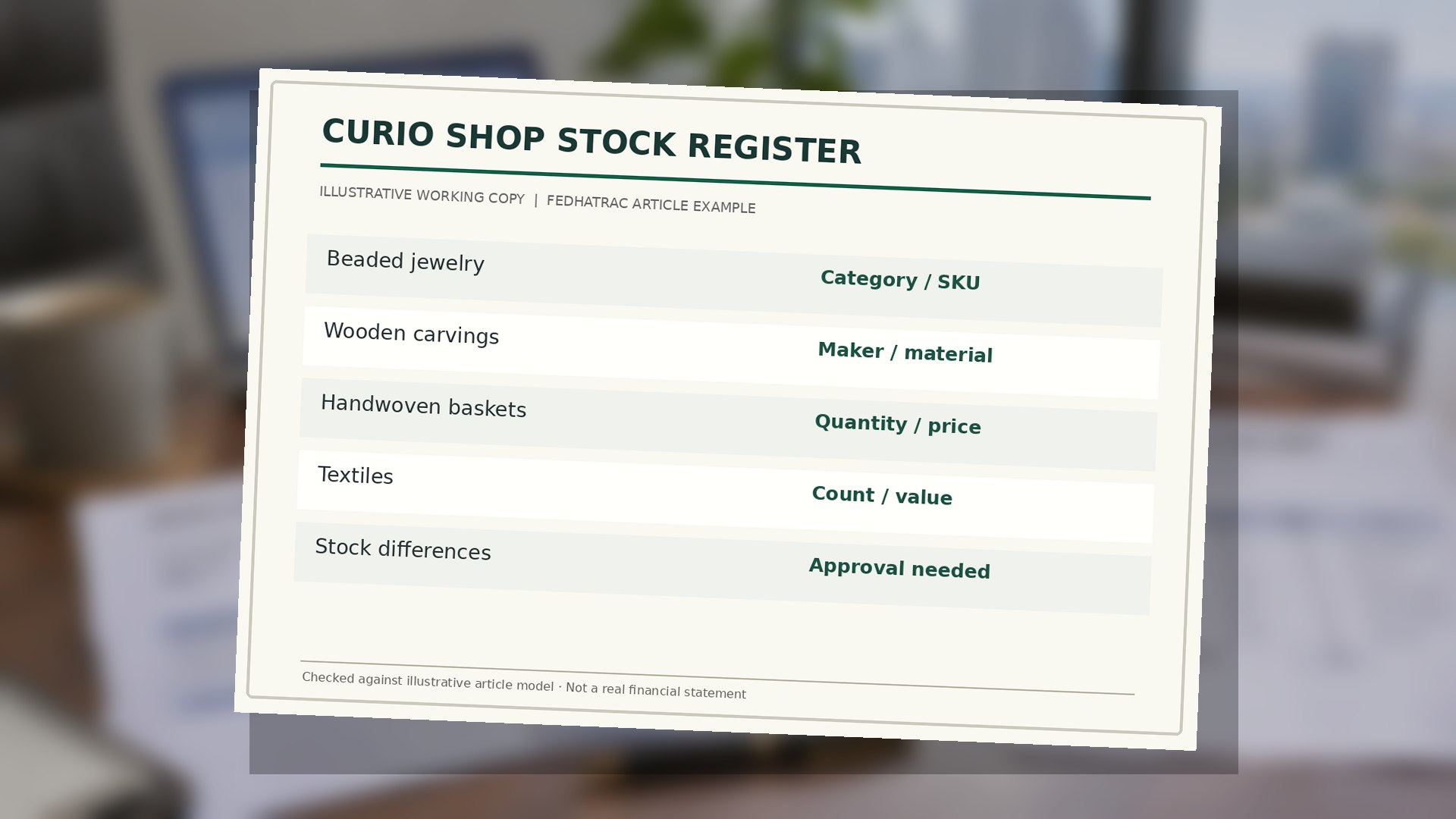
Curio shop management in kenya — artisan consignment ledger
The operational routine is straightforward: Require approval for refunds, record returned condition and avoid relisting damaged items as saleable. Write-offs must have reason, quantity and authorization. A record becomes useful only when the person who prepared it, the date and the approving manager can be identified. This avoids turning every exception into an untraceable verbal explanation.
At FedhaTrac, FedhaTrac’s reports can distinguish legitimate credits and inventory adjustments from unexplained shortages. In curio shop management in Kenya, we prefer information that can be checked back to an agreed contract, a numbered register, a genuine invoice or a banked payment, as appropriate.
Match online orders and shipping with shop sales
In curio shop management in Kenya, A shop that receives orders through messaging apps or a website needs to preserve customer order details, product availability, shipping charges and settlement evidence. A parcel left with a courier is not always proof the customer received an item in acceptable condition. A manager should be able to follow the movement without asking staff to reconstruct it from memory. The business should be able to show how this decision affects its invoices, cash commitments and eventual financial result.
The operational routine is straightforward: Connect the order reference, product, invoice, shipping document, tracking evidence and any return. Document who pays delivery and currency-conversion fees. A record becomes useful only when the person who prepared it, the date and the approving manager can be identified. This avoids turning every exception into an untraceable verbal explanation.
At FedhaTrac, Our business operations support can help organize invoice and customer-account records; it does not claim an automatic connector to every social platform or international courier. In curio shop management in Kenya, we prefer information that can be checked back to an agreed contract, a numbered register, a genuine invoice or a banked payment, as appropriate.
Use a short monthly report to keep artisans paid
In curio shop management in Kenya, A monthly review should answer what sold, what remains, which makers are owed, which goods are on consignment and whether cash covers the next replenishment. This turns a scenic store into a manageable commercial business. The practical challenge is visible in day-to-day operations. The business should be able to show how this decision affects its invoices, cash commitments and eventual financial result.

Stock count and sales records for curio and craft shop in Kenya
The operational routine is straightforward: Review top and bottom products, cash and card settlement differences, amounts due to artisans, inventory exceptions and any unresolved regulated-material concerns. A record becomes useful only when the person who prepared it, the date and the approving manager can be identified. This avoids turning every exception into an untraceable verbal explanation.
At FedhaTrac, FedhaTrac can help owners prepare these records and schedule practical performance reviews. In curio shop management in Kenya, we prefer information that can be checked back to an agreed contract, a numbered register, a genuine invoice or a banked payment, as appropriate.
A worked example: Kifahari Heritage Crafts Ltd. (fictional)
The following is an illustrative financial model for Kifahari Heritage Crafts Ltd., a fictional curio and craft shop used only to explain curio shop management in Kenya. It is not a report about a real FedhaTrac customer, and none of the figures should be used as industry benchmarks or quoted supplier prices.
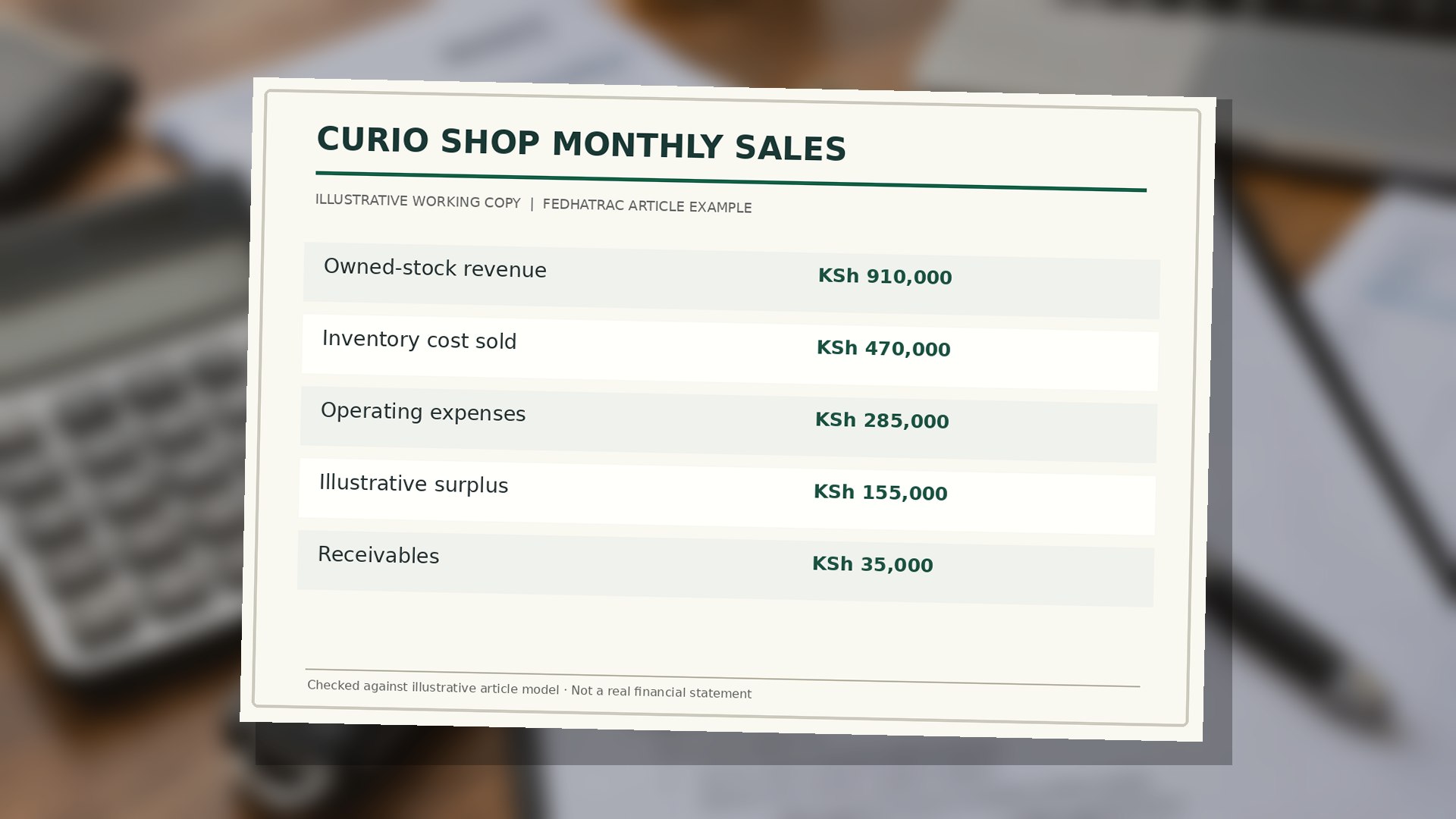
Kifahari Heritage Crafts earns KSh 910,000 from owned-stock sales in a fictional month. Cost of goods sold is KSh 470,000 and approved operating expenses are KSh 285,000, giving KSh 155,000 operating surplus before finance charges and tax. Cash receipts total KSh 875,000 while KSh 35,000 remains due from credit customers. With KSh 95,000 opening cash, KSh 400,000 paid to suppliers for related purchases and KSh 285,000 in other cash operating costs, closing cash is KSh 285,000: 95,000 + 875,000 − 400,000 − 285,000. The illustration assumes KSh 70,000 of related supplier costs remain payable and does not include separate consignment items. If the store acts as an agent for artisans, the income recognition and maker liability must be assessed under actual contracts, not copied from this owned-stock example.
The lesson for curio shop management in Kenya is that a single headline amount rarely captures all the obligations. Owners should inspect the underlying document trail, whether money has actually been received or paid, and any commitments that fall due after the reporting date. We help connect the evidence to sensible financial reporting and management conversations, but the operator must certify its physical activities and the professional accountant must apply the correct reporting policy.
A simple artisan statement builds trust
A maker statement should show each item received, the agreed supply or consignment basis, pieces sold, legitimate returns, amounts due and money already paid. Review these statements before peak visitor periods so disputes do not stop replenishment. For one-off objects, preserve the item description and relevant photograph or SKU reference; for standard beadwork, use a consistent batch or product family that staff can count reliably.
Supplier invoices and margin report for curio and craft shop in Kenya
Use a shop-floor count, not only a screen balance
At close of day, check the cash drawer and review the day’s sales settlement; at a reasonable interval, count high-value one-off pieces and compare the shelf quantities with POS or inventory records. Staff should never reduce stock to hide a sale that was not entered. Resolve genuine breakage, theft suspicion or returns through a controlled adjustment process and keep the owner’s approval.
How we help turn records into decisions
Our services include POS and inventory, business operations support and financial reporting, alongside practical reconciliation, accounting, tax-document preparation and scheduled reviews when relevant. In curio shop management in Kenya, our starting point is a discussion about which documents already exist and where the main commercial disagreements or delays arise. We agree a reporting period, identify missing evidence and produce a workable record flow rather than claiming that one button solves an entire business operation.
For our published capabilities and available service options, see FedhaTrac services, business management services, and audit preparation. Internal links should lead to related help, not replace the need for clear explanations here. Curio shop management in kenya is stronger when each monthly review ends with named follow-ups for unresolved balances and costs.
Kenyan compliance and supporting evidence
Kenyan business owners should maintain appropriate transaction records and check tax obligations for their actual circumstances. KRA’s eTIMS guidance explains electronic business invoicing, while other licenses and operational requirements vary by the activities performed. For this curio and craft shop, an invoice or financial spreadsheet is not a substitute for permits, clinical or food-safety decisions, vehicle compliance, or lawful stock provenance where applicable.
Relevant sector references include Kenya Wildlife Service wildlife trade guidance and National Museums of Kenya. In curio shop management in Kenya, we advise checking changes with the competent authority and keeping the dated source documents alongside related financial records. FedhaTrac can support record organization and tax preparation within its confirmed scope; regulatory approval must come from the appropriate authority.
Frequently asked questions
Does FedhaTrac have a POS for curio shops?
The user-confirmed FedhaTrac platform includes POS and inventory views. We can discuss available functionality and the records needed for the particular shop. With curio shop management in Kenya, the right first step is to define the evidence and the decision the business needs to make, then select the appropriate support rather than assume unverified automation.
Can we track artisan goods sold on consignment?
We can help prepare supplier and accounting records, but the contract determines ownership, fees and when sales or commissions are earned. With curio shop management in Kenya, the right first step is to define the evidence and the decision the business needs to make, then select the appropriate support rather than assume unverified automation.
Is every wooden curio export restricted?
No blanket statement is justified. Check the material and provenance; KWS or the National Museums may be relevant for wildlife products, antiquities or protected objects. With curio shop management in Kenya, the right first step is to define the evidence and the decision the business needs to make, then select the appropriate support rather than assume unverified automation.
What would you review in the first month?
Product/SKU records, maker agreements, opening stock count, point-of-sale summaries, payment settlements, invoices, expenses and any shipping documentation. With curio shop management in Kenya, the right first step is to define the evidence and the decision the business needs to make, then select the appropriate support rather than assume unverified automation.
Build the next month on clearer evidence
Good curio shop management in Kenya is not about producing a thicker bundle of papers at month-end. It is about knowing which income is earned, which amounts remain owed, what costs belong to each activity, and which decisions the owner should take now. At FedhaTrac, we bring bookkeeping discipline, financial reporting and practical advisory support to that process without pretending to replace the specialists who operate the business itself.
Contact FedhaTrac to discuss your current records and the services suited to your operation. We can help identify the financial evidence to organize first, create a realistic reporting plan, and make the next review more useful than a glance at the bank balance.


