

Cash flow statement for Kenyan businesses is a practical management subject, not terminology reserved for accountants. It helps an owner answer a precise question: Where did cash come from, where did it go, and can normal operations fund the business? Kenyan SMEs make sales through bank accounts, M-Pesa, cash, card channels and credit invoices, while costs may be paid immediately or recognised later. Without disciplined records, those timing differences make otherwise familiar numbers difficult to trust.
This guide explains cash flow statement for Kenyan businesses in plain professional language and then moves into implementation. You will see the accounting logic, a worked KES example, the review questions management should ask, common errors and the monthly workflow required to produce reliable information. The aim is not to turn an owner into a technical accountant. It is to make the report useful enough that management can challenge unusual figures, assign action and recognise when specialist judgement is needed.
The guide forms part of FedhaTrac’s Accounting for Kenyan SMEs cluster. It builds on bookkeeping fundamentals and the wider accounting and financial-reporting overview. Where formal reporting is required, the applicable framework and entity circumstances matter. The IFRS Foundation’s IFRS for SMEs resources explain the purpose and scope of the standard, while ICPAK’s illustrative Kenyan SME statements provide a useful local presentation reference.
What a Cash Flow Statement Explains
A cash flow statement for Kenyan businesses explains why cash increased or decreased during a period. It begins with opening cash, classifies actual cash movement into operating, investing and financing activities, and reconciles to closing cash. The statement answers a question neither the P&L nor balance sheet answers alone: where did the money come from and where did it go?
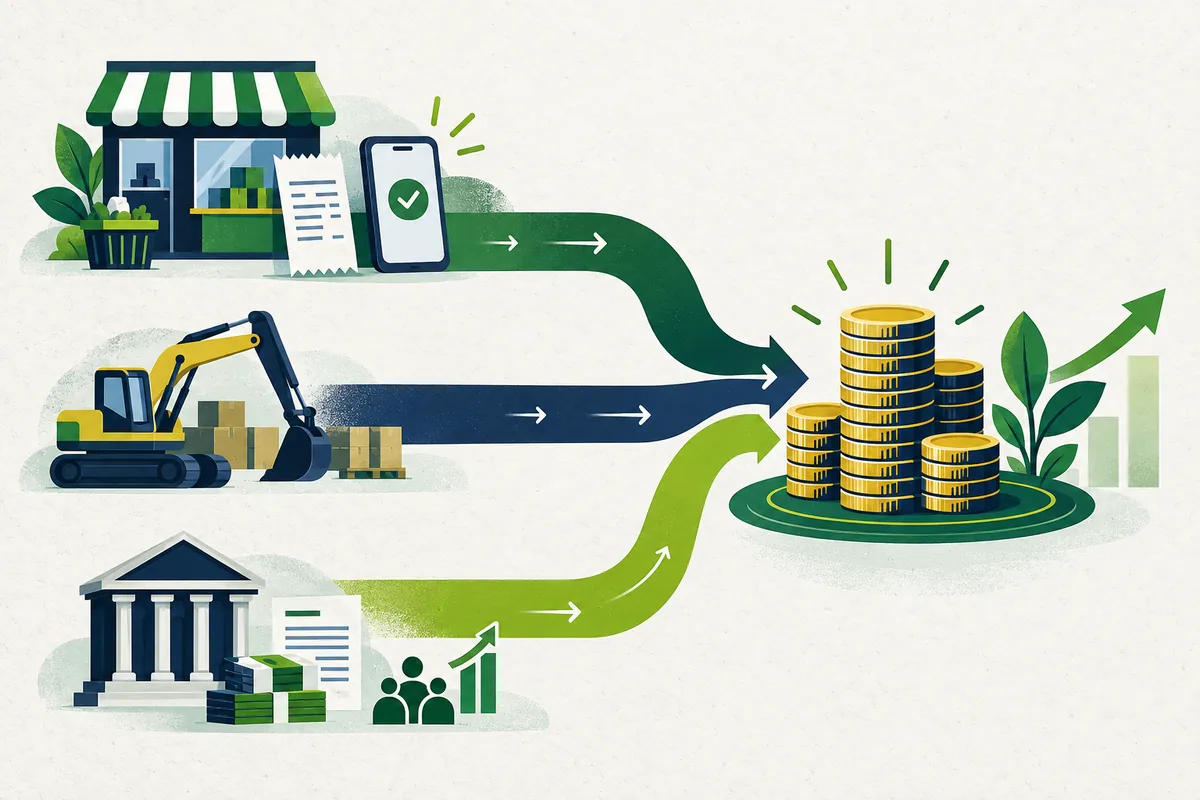
Operating cash flow relates to normal trading activity’s customer collections, supplier payments, staff costs and operating expenses. Investing cash flow covers assets and investments, such as purchasing equipment or selling a vehicle. Financing cash flow shows money raised from or returned to lenders and owners. Keeping these categories separate prevents a new loan or asset sale from disguising weak cash generation from ordinary operations.
Operating, Investing and Financing Cash Flow
| Section | Typical cash movements | What management learns |
|---|---|---|
| Operating | Customer receipts, supplier payments, operating costs and applicable taxes | Whether normal business activity generates cash |
| Investing | Equipment, vehicles, technology and investment disposals | How much cash is being committed to future capacity |
| Financing | Loans, owner capital, principal repayments and distributions | How the business funds itself and services finance |
Consider a company that generates KES 520,000 from operations, spends KES 300,000 on equipment and repays KES 120,000 of loan principal. Cash increases by KES 100,000. The total movement is positive, but the categories explain why. The business is funding investment and debt repayment from operations quite different from a business whose cash increased only because it borrowed KES 1 million.
How to Read Cash Flow Beyond the Closing Balance
Begin with operating cash flow. Persistent negative operating cash flow requires an explanation even when sales and accounting profit are growing. Review customer collection days, deposits, stock purchases, supplier terms and tax timing. Next assess investing activity: asset purchases may be sensible, but they need an appropriate funding plan. Finally, review financing. Borrowing can support growth, yet repeated borrowing to pay ordinary monthly expenses points to a structural problem.
Why profit and cash move differently
A credit sale can increase profit before the customer pays. Buying inventory uses cash before the stock appears in cost of sales. Depreciation reduces accounting profit but does not create a current-period payment. Loan principal consumes cash without being an operating expense. These timing and classification differences are why a profitable business can still struggle to pay suppliers and taxes.

Build a Reliable Cash Flow Statement
- Reconcile every bank, M-Pesa and cash account.
- Remove transfers between the business’s own accounts from inflows and outflows.
- Separate customer collections from loans, owner funding and asset-sale proceeds.
- Classify equipment and other capital expenditure as investing activity.
- Split loan repayments between principal and interest where appropriate.
- Reconcile opening cash plus the net movement to closing cash.
The statement explains history; management also needs a forecast. A 13-week cash forecast places expected collections and payments on specific dates. It can expose a shortage early enough to accelerate collections, negotiate supplier timing, defer discretionary spending or arrange appropriate financing. Historic cash flow and forward forecasting work best together.
Direct and Indirect Views of Operating Cash
Under a direct presentation, operating cash flow lists major classes of receipts and payments, such as cash collected from customers and paid to suppliers. This is intuitive for many owners. An indirect presentation begins with accounting profit and adjusts for non-cash items and working-capital movements. The indirect method is especially useful for explaining why profit did not become cash. Whichever presentation is used, the closing figure must agree to reconciled cash balances.
Working Capital: The Main Bridge Between Profit and Cash
Receivables
When customers take longer to pay, reported revenue may remain strong while operating cash weakens. Track collections by invoice and customer, not only total debtors. Deposits, staged billing and clear credit limits can reduce the funding gap on large jobs.
Inventory
Inventory purchases consume cash before goods are sold. Buying in bulk may lower unit cost yet create storage, expiry and liquidity risk. Compare inventory days with sales demand and supplier lead times. Cash trapped in slow stock cannot pay salaries or taxes.
Payables
Supplier credit supports cash temporarily. Extending payment without agreement can damage supply relationships and conceal a shortage. Track due dates and prioritise deliberately. A healthy working-capital strategy aligns customer collection, stock holding and supplier terms rather than pushing all pressure onto creditors.
A 13-Week Cash Forecast in Practice
List opening cash, expected receipts and dated payments for each of the next thirteen weeks. Use realistic collection probabilities rather than invoice due dates alone. Separate payroll, rent, taxes, loan payments, supplier commitments and discretionary spending. Update actuals weekly and roll the horizon forward. The purpose is not perfect prediction; it is early warning and a disciplined conversation about choices.
| Forecast signal | Possible response | Risk to avoid |
|---|---|---|
| Large customer pays after supplier due date | Request deposit, stage billing or agree supplier timing | Assuming the customer will pay early without evidence |
| Tax and loan payments fall in same week | Reserve cash earlier and defer discretionary purchases | Using statutory funds for routine spending |
| Equipment purchase causes a deficit | Evaluate leasing, financing or a later purchase date | Funding long-term assets entirely from short-term cash |

Cash-Flow Warning Signs
- Operating cash is negative for several months despite reported profit.
- Collections increasingly depend on one or two customers.
- Supplier payments are repeatedly delayed without agreement.
- Loans are used to cover routine monthly expenses rather than productive investment.
- M-Pesa and cash channels cannot be reconciled to the books.
- Tax payments create recurring emergencies because no cash is reserved.
One difficult month may be explainable; a repeated pattern demands action. Management should identify whether the root cause is low margin, slow collection, excessive inventory, debt commitments or uncontrolled spending. Each cause requires a different response.
Scenario Planning When Cash Is Uncertain
A single forecast can create false confidence. Prepare a base case, a downside case and a management-action case. The downside case might assume the largest customer pays two weeks late, sales are 15% below plan or a tax payment is higher than expected. The action case should show the effect of steps management can genuinely take, such as requesting deposits, reducing stock orders or postponing discretionary capital expenditure.
Do not solve every shortage by inserting an unexplained “loan†line. If financing is realistic, state the amount, timing, cost, approval status and repayment plan. An unfunded assumption is not a solution. Likewise, do not move payments outside the forecast horizon simply to make the closing balance positive. Keep contractual and statutory due dates visible, then show which dates have been formally renegotiated.
Cash buffers and reserved money
Define a minimum operating cash level based on payroll, rent, supplier exposure and volatility. Separate cash that is legally or commercially restricted, including customer deposits or amounts reserved for tax, from freely available cash. A positive total balance can still be insufficient when part of the money has another purpose. This distinction should be clear in both the forecast and management discussion.
Connecting cash flow to decisions
Use the report before committing to hiring, equipment, new premises or a large contract. Model the deposit, delivery costs, collection terms and downside risk. A decision that appears profitable can require more working capital than the SME can safely provide. Cash-flow analysis brings the timing dimension into strategy.
Cash Flow and Banking Decisions
A lender will normally look beyond the closing bank balance. Consistent operating cash generation indicates whether the business can service debt from ordinary activity. The forecast shows when a facility may be drawn and how it will be repaid. Prepare reconciled statements, ageing schedules and realistic assumptions before approaching a financier. Borrowing that is matched to a clear working-capital cycle or productive asset is easier to evaluate than a general request to cover unexplained shortages. Management should also compare the cost of finance with the margin and cash benefit expected from the activity it supports.
Cash Controls for Kenyan SMEs
Common problems include treating bank-to-M-Pesa transfers as new income, classifying a loan as sales, omitting cash expenses and failing to reconcile mobile-money activity. FedhaTrac can help an SME bring these channels into one bookkeeping process, reconcile opening and closing cash and prepare both historic reporting and a practical forecast.
Frequently Asked Questions
Is a cash flow statement the same as a bank statement?
No. A bank statement covers one account. A cash flow statement combines relevant cash channels and classifies movements by operating, investing and financing purpose.
Why is operating cash flow important?
It shows whether ordinary business activity is generating cash. A business cannot rely indefinitely on new loans or owner injections to cover recurring operating shortfalls.
Can cash flow be positive when the business makes a loss?
Yes. Borrowing, owner funding, selling assets or collecting old receivables may increase cash even when current operations make a loss.
Why is buying equipment not an operating cash flow?
Equipment normally provides benefits over multiple periods, so its purchase is classified as investing activity. Separating it prevents routine operations and long-term investment from being confused.
How often should cash flow be reviewed?
Historic cash flow is commonly reviewed monthly. A short-term cash forecast should be updated more frequently when liquidity is tight or collections and payments are volatile.
What is the first step when cash is tight?
Build a dated forecast using realistic collection and payment assumptions. Then address the largest timing gaps rather than relying only on the current bank balance.

Final Thoughts
cash flow statement for Kenyan businesses becomes valuable when management understands the logic, trusts the data and acts on the result. The strongest report is not necessarily the longest. It is the one that reconciles to evidence, uses consistent classifications, explains material movements and leads to a clear decision.
Build the process from dependable records. Reconcile cash, review control accounts, maintain supporting schedules and close the month on a defined timetable. Then compare performance, investigate exceptions and assign actions. This discipline turns accounting from a year-end compliance exercise into an operating system for the business.
For Kenyan SMEs, the practical goal is financial visibility without unnecessary complexity. Start with the decisions that matter, agree the minimum reliable reporting pack and improve it as the organisation grows. When a transaction or accounting judgement is material, seek qualified advice rather than forcing an uncertain answer into the report.
cash flow statement for Kenyan businesses: management summary
- A cash flow statement for Kenyan businesses explains why the bank balance changed.
- The cash flow statement for Kenyan businesses separates operating, investing and financing cash.
- A monthly cash flow statement for Kenyan businesses highlights collection and payment timing.
- The cash flow statement for Kenyan businesses should reconcile opening cash to closing cash.
- Owners use the cash flow statement for Kenyan businesses to test whether operations generate cash.
- A reliable cash flow statement for Kenyan businesses includes bank, M-Pesa and cash accounts.
- The cash flow statement for Kenyan businesses exposes growth funded by borrowing rather than operations.
- Comparative cash flow statement for Kenyan businesses reporting reveals recurring pressure points.
- The cash flow statement for Kenyan businesses works best beside a forward cash forecast.
- A clear cash flow statement for Kenyan businesses supports payment and funding decisions.
- Reviewing a cash flow statement for Kenyan businesses regularly strengthens liquidity control.
- cash flow statement for Kenyan businesses should be reviewed with evidence and clear responsibility.
- A consistent cash flow statement for Kenyan businesses process supports confident SME decisions.
- Use cash flow statement for Kenyan businesses to turn financial evidence into a specific management action.
Turn the Report into a Monthly Decision
Gather the last three months of bank, M-Pesa and accounting records, identify the balances you do not trust, and list the five decisions management needs the numbers to support. Then speak with FedhaTrac about a proportionate bookkeeping, accounting and reporting workflow for your SME.


