Key Takeaways
- Bookkeeping for SMEs in Kenya is no longer just about keeping receipts. It supports KRA compliance, tax filing, eTIMS records and better business decisions.
- Clean monthly records make it easier to track sales, expenses, invoices, bank payments, M-Pesa collections and tax obligations.
- Businesses should connect bookkeeping with eTIMS invoices because KRA requires electronic tax invoice support for many business expenses.
- FedhaTrac helps SMEs move from scattered records to a clearer finance workflow.
Introduction
Bookkeeping for SMEs in Kenya is one of the simplest ways to protect a growing business from tax stress, cash-flow confusion and poor decision-making. Many business owners only think about their books when a deadline is near, when a KRA filing is due, or when an accountant asks for missing receipts. By then, the pressure is already high.
Good bookkeeping is different. It gives the owner a monthly view of income, expenses, invoices, payments, bank balances, M-Pesa activity, payroll, supplier costs and tax records. It turns financial information into a system, not a last-minute scramble.
For SMEs in Kenya, the need is even stronger because business records now connect directly to KRA compliance. KRA explains that eTIMS helps taxpayers keep invoice records and simplify return filing. KRA also notes that persons engaged in business are required to onboard eTIMS and issue electronic tax invoices.
Official reference: KRA eTIMS guide
Why Bookkeeping Matters for Kenyan SMEs
Bookkeeping is the daily and monthly process of recording what happens financially in the business. It shows money received, money spent, invoices raised, bills owed, taxes due and balances that need attention.
Without this discipline, a business owner may be selling every day but still not know whether the business is profitable.
Many SMEs struggle because records are spread across receipts, WhatsApp messages, bank statements, M-Pesa statements, notebooks, emails and invoices. This makes tax filing harder and makes management decisions weaker.
If expenses are not recorded correctly, the owner cannot see what is draining cash. If invoices are not tracked, customers can delay payment unnoticed. If sales records are incomplete, tax filing becomes risky.
The Records KRA Expects Your Business to Keep
Bookkeeping for SMEs in Kenya should support compliance from the start. A business should keep clear records of sales invoices, purchase invoices, expense receipts, bank statements, mobile money statements, payroll summaries, withholding certificates, VAT records where applicable and annual tax return support. KRA's guidance on filing and paying taxes explains obligations such as PAYE, corporation tax, installment tax, withholding tax, VAT and other tax categories.
Official reference: KRA Filing and Paying Taxes
The important lesson for business owners is simple: tax filing becomes easier when records are prepared throughout the year. If you wait until the deadline, you may spend days looking for invoices, missing supplier documents, reconciling bank transfers and trying to remember why certain payments were made.
A Simple Monthly Bookkeeping Rhythm
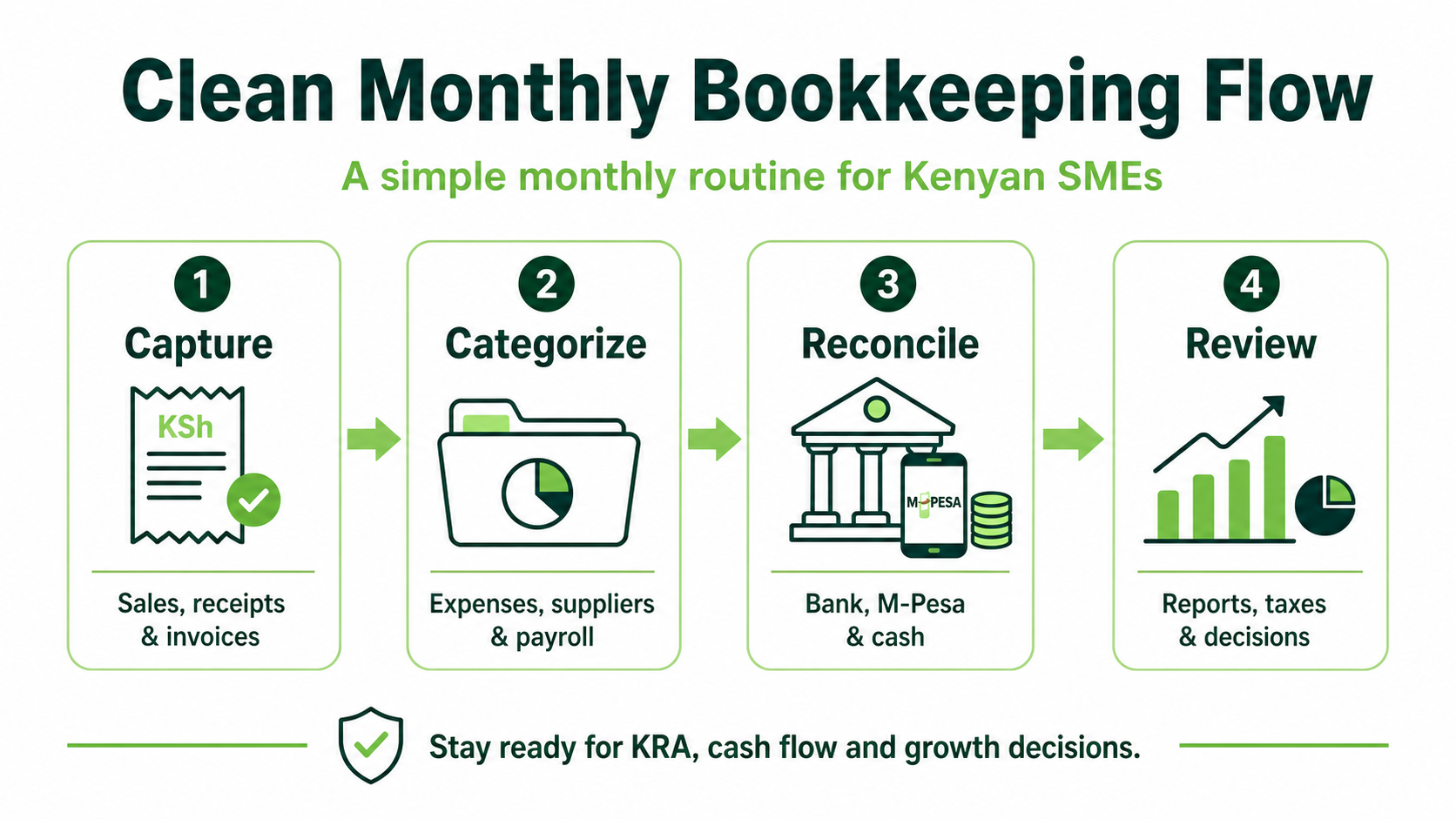
A good monthly process should not feel complicated. Start by collecting sales records and income reports. Then gather expenses, supplier invoices, subscriptions, payroll costs and business payments.
Next, reconcile those records with bank and M-Pesa statements. Finally, review reports that show income, expenses, outstanding invoices, tax exposure and cash-flow pressure.
This rhythm helps the owner see what is happening before problems become expensive. It also makes discussions with an accountant more useful because the records are already organized.
How Bookkeeping Reduces Tax Filing Stress
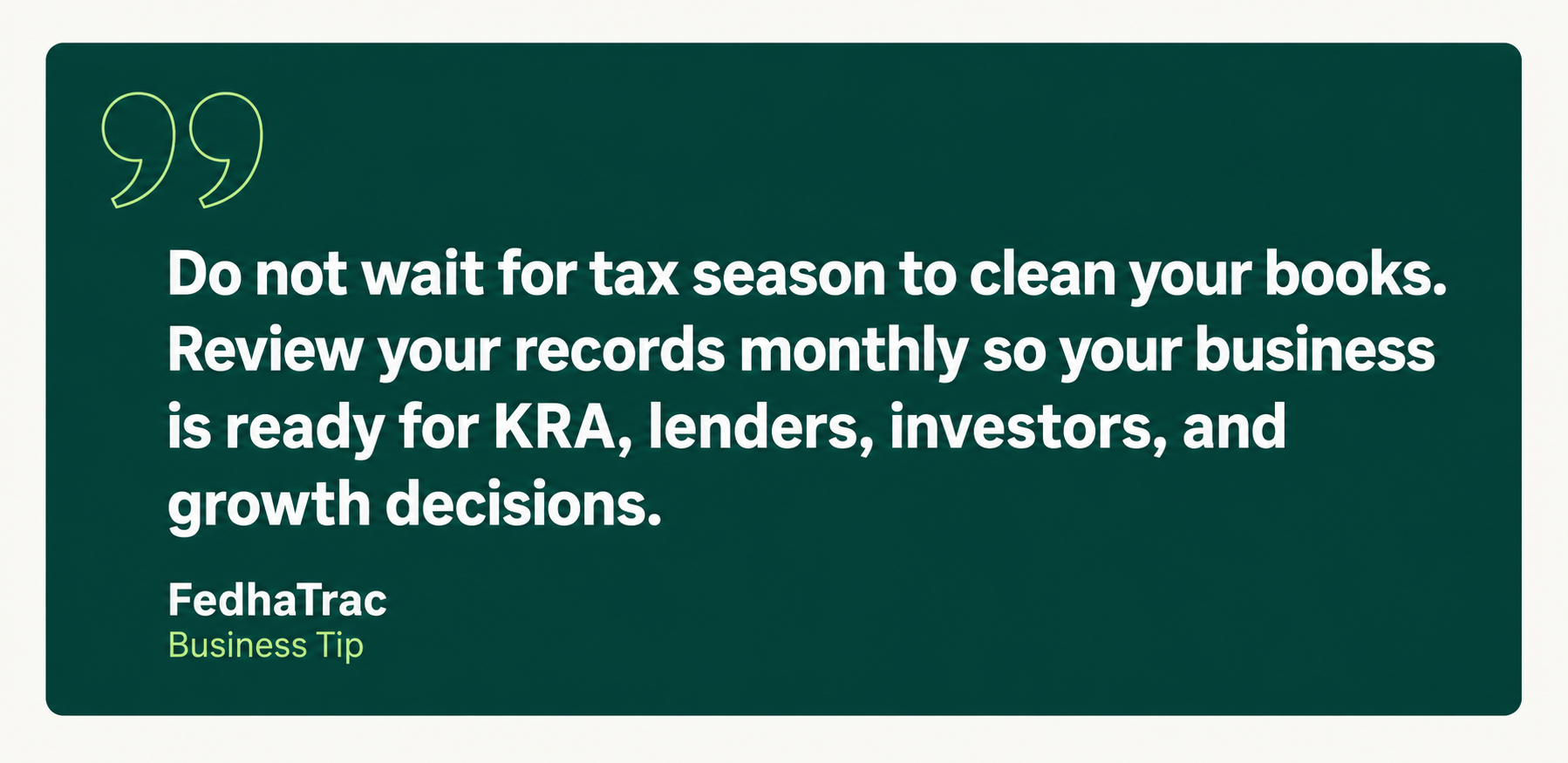
Tax filing stress usually comes from missing records. When bookkeeping is done monthly, tax filing becomes a review process instead of a reconstruction exercise.
The accountant can identify missing eTIMS invoices, confirm income, check expense support and prepare returns with fewer surprises.
This is why businesses should not separate bookkeeping from tax compliance. Every receipt, invoice and bank transaction tells part of the tax story. The cleaner the monthly books, the easier the annual or monthly filing process becomes.
How FedhaTrac Helps SMEs Stay Organized
FedhaTrac helps Kenyan businesses organize financial records, track transactions and prepare better reports.
Internal links to add:
- FedhaTrac Home
- FedhaTrac Accounting
- FedhaTrac Features
- Everything to Do with Taxes
- Tax Compliance and Regulatory Filing
Conclusion
Bookkeeping for SMEs in Kenya is not just administration. It is business protection. It helps owners understand cash flow, avoid tax stress, support KRA compliance and make smarter decisions. The earlier a business builds a clean bookkeeping routine, the easier it becomes to grow with confidence.