

Retail POS Management in Kenya: 5 Costly Errors to Prevent
A walk-in shop can be busy from morning to evening and still lose money through small unrecorded discounts, stock differences and delayed supplier payments. A POS receipt proves a transaction was recorded; it does not automatically prove every product left the shelf correctly or every payment reached the business. Retail POS management in Kenya is a set of daily decisions linking the till, the store room and the bank.
At FedhaTrac, we support retail businesses with POS options, financial record review, purchase-order information and practical management reporting. A shop may use the FedhaTrac POS or provide reports from its existing system; neither approach should be described as a guaranteed integration with every payment processor. The owner remains responsible for staff supervision and physical stock custody.
This article is not another general retail-bookkeeping introduction. It follows a fictional home-goods shop called MtaaCorner Household Shop Ltd. and asks what can go wrong at the point where a product is scanned, a customer pays and the purchase appears in the business’s figures.
Error one: trusting sales totals without checking settlement
Retailers often compare the till total to yesterday and stop there. Yet a day of sales may include cash, M-Pesa, card, bank transfer and approved customer credit. Card settlements can arrive later, mobile-money references can be misstated and a cash drawer can contain a different amount from the POS close. A high sales figure is therefore not the same as cash received.

People reviewing operations and customer records for retail POS management in Kenya
Close each till by operator and shift. Retain POS sales, transaction categories, authorized refunds, payment-channel totals and the actual cash count; match electronic receipts to the provider or bank statement. Record unexplained differences in an exception log with reviewer sign-off instead of silently adjusting revenue to make the bank account agree. That discipline strengthens retail POS management in Kenya.
A useful daily question is whether a payment-channel difference is genuinely missing or merely unsettled. Retail POS management in Kenya benefits from checking dates and settlement references before asking cashiers to reimburse a supposed shortage. Preserve the original total, matching evidence and final explanation; otherwise the next manager cannot tell a timing difference from an unapproved reversal. The review should be consistent across busy weekends, quiet weekdays and staff changes.
Our reconciliation and reporting support can compare these records. Good retail POS management in Kenya makes a settlement delay visible before it becomes a missing-payment allegation.
Error two: letting discounts and refunds bypass approval
Discounts are commercially useful when they are consistent with an agreed promotion. Problems arise when price overrides, staff purchases or refunds are processed without a record of why they happened. A handful of KSh 200 adjustments each day can become material over a month, and a manual refund can conceal a customer-service issue or deliberate misuse.
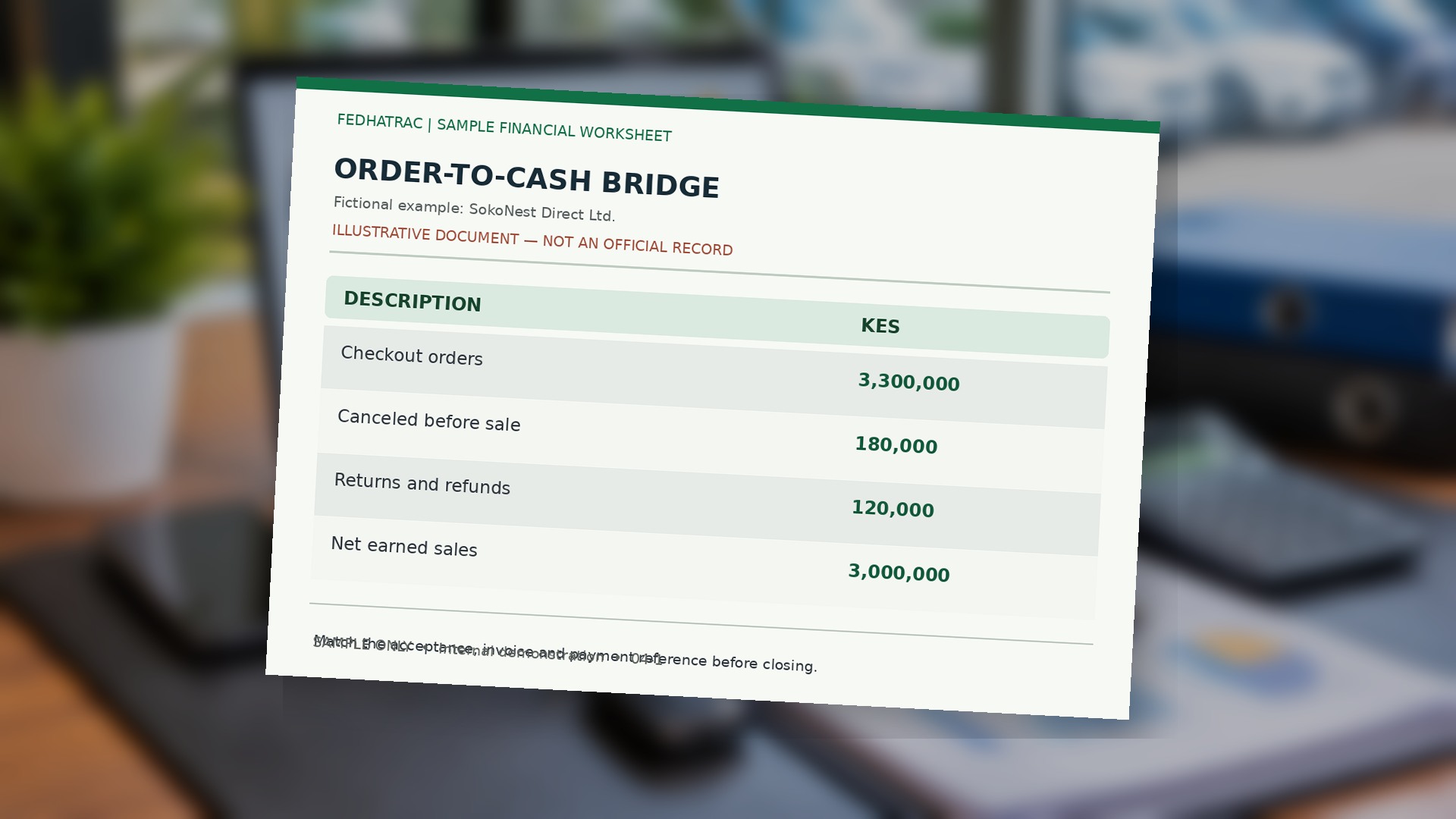
Photographed-style sample daily till close documentation
Define which job roles may approve markdowns, returns and voided sales. Retain a reason code and reference to the original receipt for each refund, and review exception reports by employee and product category. Separate an authorized exchange of goods from a cash refund so stock and payment records both reflect what happened. That distinction matters for retail POS management in Kenya.
The refund report should also be assessed against normal trading patterns. A busy promotion will naturally create more price adjustments, while repeated overrides outside approved hours may deserve attention. Retail POS management in Kenya is not an excuse to accuse employees without evidence. Managers can protect both customers and staff by using written authorization rules, comparing exceptions with promotion schedules and making a documented decision when corrective training or closer supervision is appropriate.
FedhaTrac can help managers use POS and financial reports to identify unusual adjustment patterns. Retail POS management in Kenya is stronger when everyone knows what needs approval rather than treating every adjustment as theft.
Error three: ignoring the gap between stock cards and shelves
A POS inventory balance can be wrong even when the system performs arithmetic correctly. The opening stock may have been entered inaccurately, purchases received without counting, damaged products omitted or goods transferred between branches without authorization. When the physical count differs from the record, margins and purchase decisions become unreliable.

Kenyan business team reviewing approved records
Use product codes and controlled goods-received entries. Count fast-moving and high-value lines frequently, record authorized wastage or damage and investigate negative quantities before making a replacement purchase. Tie supplier delivery notes to item receipts and invoice references, and preserve the approving employee on unusual stock adjustments. Such evidence supports retail POS management in Kenya.
A shop should test the high-risk products first, not always count everything on the same day. Retail POS management in Kenya can use rotating counts for easily stolen, perishable or high-value items and broader full counts at appropriate intervals. Keep stock units consistent: a carton, packet and individual item must not be confused in purchasing or sales. Record the reason when inventory is converted between packages so valuation changes remain understandable.
FedhaTrac supports stock reporting and inventory-related financial schedules. Practical retail POS management in Kenya turns variance reports into purchasing decisions instead of merely printing a stock figure at month-end.
Error four: treating supplier orders as cash already spent
A shop can agree to buy new stock, receive an invoice and settle the supplier weeks later. The commitment affects working capital even while bank cash looks healthy. Invoices may include goods not yet delivered, negotiated credit notes or changed unit prices. Failing to distinguish these stages leads to double payment, wrong cost of goods sold or aggressive reordering.
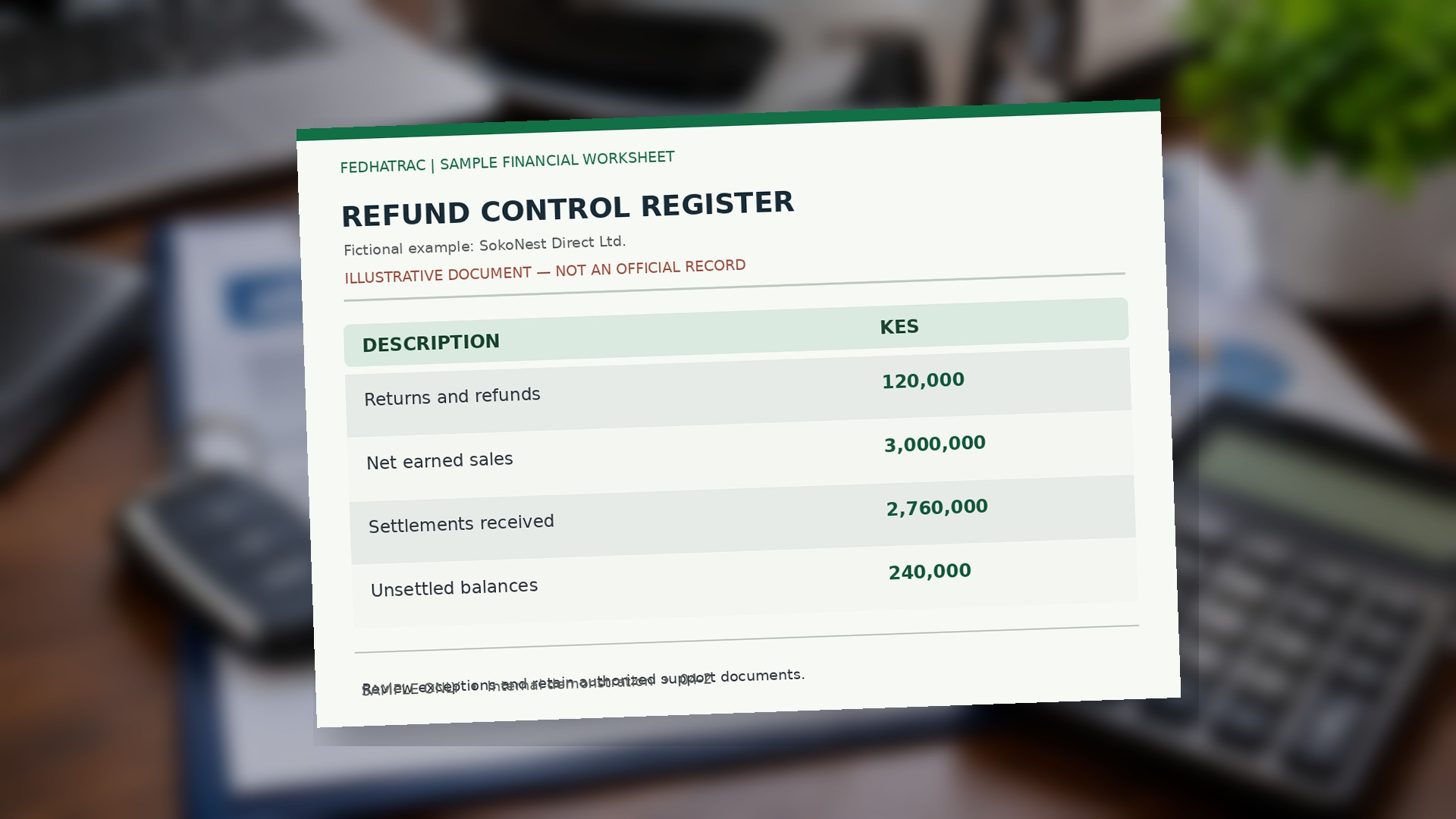
Photographed-style sample stock variance register records
Separate the approved purchase request, supplier order, received quantity, invoice and payment record. Reconcile outstanding supplier statements at least monthly and investigate price changes that do not match the agreement. Inventory purchases are not automatically the same as cost of goods sold; unsold goods still represent stock under appropriate accounting policies. These approvals underpin retail POS management in Kenya.
A practical purchasing review asks whether the next order is driven by actual demand, a supplier discount or pressure from an approaching due date. Retail POS management in Kenya helps owners see that buying more stock merely to obtain a price reduction can weaken cash availability. Compare sell-through rates and storage capacity with the cost of tying up working capital. Supplier credit is useful only when the stock can be sold and the obligation honored.
Our purchase-order, supplier and advisory support can reveal what is owed and what has actually been received. Retail POS management in Kenya must give owners a useful supplier-commitment view, not only a payment history.
Error five: closing the month without a profitability review
Revenue growth can hide declining margin if the shop is selling a cheaper product mix, absorbing more delivery costs or discounting frequently. Managers need a bridge from gross sales through approved returns and cost of goods sold to net profit. They also need to compare inventory movement with the reported purchases and look for unresolved credit balances.

Professional activity and financial decision-making at a Kenyan business
Prepare a management pack showing net sales, gross profit, discount percentage, stock adjustments, overdue customers, supplier payables and available cash. Compare current figures with reasonable prior periods and ask for explanations supported by documents. Do not label a higher turnover figure as business growth until margin and cash results support that conclusion. That schedule improves retail POS management in Kenya.
Management can use a simple margin bridge rather than a large collection of vanity measures. Retail POS management in Kenya should show gross revenue, authorized returns, the cost of goods actually sold, stock losses and operating expenses separately. If the margin falls, ask whether unit cost, price, mix or wastage changed. One clear cause is more useful than a dozen unexplained percentages in a polished dashboard.
FedhaTrac can prepare management reports and quarterly financial reviews from approved records. Retail POS management in Kenya reaches its purpose when the report changes the next order, promotion or staffing decision.
Keep customer and supplier records clean without collecting excess data
An ordinary walk-in customer may not need a full personal profile for every small purchase. A business should collect information that fits the sale, tax documentation and legitimate customer-service needs. Meanwhile, the names and bank details of material suppliers must be properly controlled. More data is not always better; unnecessary personal information creates privacy obligations without improving the till balance.
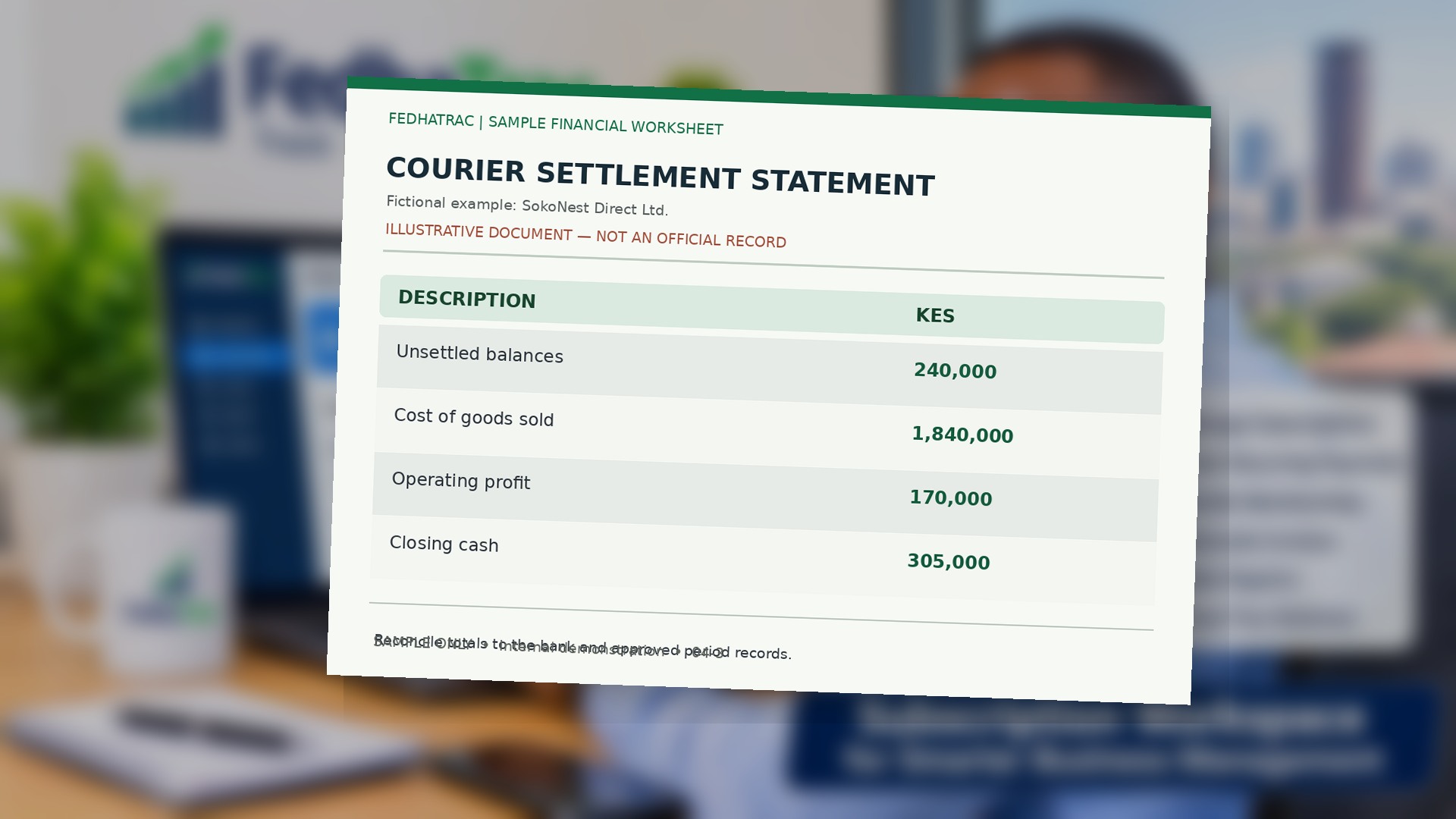
Photographed-style sample supplier-payables review report
Separate anonymous walk-in sales from customer-credit records, and restrict access to the records needed for follow-up. Validate supplier account changes through an independent approval process. Retain the relevant original transaction evidence when correcting a name or reference instead of making untraceable edits to an old sale. That review strengthens retail POS management in Kenya.
A customer returning a defective item may need a receipt reference and enough contact details to resolve the case; that does not justify collecting unrelated personal information. Retail POS management in Kenya should keep customer-service needs proportionate and supplier details protected. Where customer credit is offered, document who authorized it and what collection terms apply. That protects legitimate customers while giving the finance team usable records to follow up on balances.
We can help review customer balances and supplier account schedules while respecting the shop’s data-handling obligations. Retail POS management in Kenya should be efficient, accountable and proportionate.
Connect eTIMS requirements to actual sales and stock evidence
Kenya Revenue Authority guidance states that persons conducting business generally need to use electronic tax invoicing, subject to applicable requirements and exceptions. Its recent notices also emphasize accurate stock records. A shop should confirm the appropriate eTIMS method and the treatment of discounts, returns and purchases rather than assuming a POS installation by itself guarantees KRA compliance.
Keep valid invoice records, approved credit notes, supporting purchase evidence and stock movement documentation in a form that the accounting team can reconcile. Consult current KRA instructions before changing invoicing configurations. If a supplier invoice is missing or invalid, flag the issue rather than inventing documentation to support an expense claim. The same safeguards support retail POS management in Kenya.
If a retailer changes its invoicing workflow, the migration deserves a test plan that checks real sample transactions, corrections and returns. Retail POS management in Kenya should preserve the relationship between a receipt, an electronic tax invoice where required and the underlying stock movement. The owner should verify responsibilities with KRA guidance and the implementation provider rather than assuming the first green status light proves every record is accurate.
FedhaTrac provides tax-compliance assistance and can help align recorded sales and expenses with supporting evidence. Responsible retail POS management in Kenya never means promising that a device automatically satisfies every statutory obligation.
Choose weekly decisions that make the next trading day easier
A shop owner does not need a fifty-page report every morning. The most useful weekly questions concern bank differences, stockouts, products with shrinking margin, pending supplier balances and abnormal staff overrides. An exception list with a named owner can outperform a beautiful dashboard that nobody opens. Consistency is more valuable than an occasional dramatic stocktake.
Hold a short review involving the owner, stock lead and cashier supervisor. Resolve items in order of financial impact and customer risk. Record follow-up actions with dates, then compare the next week’s results to see whether the change worked. Larger capital decisions can be reserved for monthly or quarterly review meetings. Managers should expect this from retail POS management in Kenya.
An owner can improve the meeting by choosing three decisions ahead of time: which products need a recount, which supplier needs a statement reconciliation and which promotion requires review. Retail POS management in Kenya becomes less stressful when such decisions are resolved weekly, before the period closes. The financial adviser can then use the monthly meeting to evaluate trends instead of spending the entire session hunting for last week’s missing paperwork.
Our business operations support and advisory meetings can make retail POS management in Kenya a disciplined cycle of evidence and action without taking operational authority away from the retailer.
A financial example: MtaaCorner Household Shop Ltd.
Imagine MtaaCorner Household Shop Ltd., a fictional urban retailer, recording KSh 2,600,000 in gross sales. Approved returns of KSh 100,000 reduce net sales to KSh 2,500,000. Customer receipts of KSh 2,380,000 leave KSh 120,000 in valid outstanding credit deliveries. Returns are not additional expenses; they reduce the relevant sales balance.
The cost of goods sold is KSh 1,580,000, leaving KSh 920,000 in gross profit. Operating overhead is KSh 690,000, including KSh 35,000 of authorized damaged-stock write-offs and KSh 30,000 in noncash depreciation. Operating profit is KSh 230,000. The hypothetical stock ledger starts at KSh 980,000, adds KSh 1,740,000 in purchases and subtracts KSh 1,580,000 cost of sales and KSh 35,000 write-offs, leaving KSh 1,105,000 in closing stock.
| Illustrative financial indicator | KES |
| Net sales | 2,500,000 |
| Cash receipts | 2,380,000 |
| Closing customer balances | 120,000 |
| Cost of goods sold | 1,580,000 |
| Gross profit | 920,000 |
| Operating profit | 230,000 |
| Closing stock | 1,105,000 |
| Supplier payables | 380,000 |
| Closing cash | 310,000 |
Supplier payables move from KSh 250,000 opening balance, plus KSh 1,740,000 received purchases, less KSh 1,610,000 paid, to KSh 380,000 outstanding. Opening cash of KSh 200,000 plus KSh 2,380,000 receipts less KSh 1,610,000 supplier payments and KSh 660,000 cash overhead leaves KSh 310,000 closing cash. The stock and payables figures demonstrate why a till summary alone cannot measure financial health.
We would use the case to discuss stock variance approvals, settlement reconciliation and the next buying decision. It is a constructed illustration, not an actual merchant, a FedhaTrac client or a promise of performance.
Frequently asked questions
Must a shop replace its POS before getting FedhaTrac support?
No. We can discuss a suitable FedhaTrac POS workflow where appropriate, or work from approved reports exported by an existing system. The important point is whether sales, payments, stock movements and adjustments can be reconciled reliably.
Will a POS automatically make us eTIMS compliant?
A POS and KRA eTIMS serve related but distinct purposes. Check which authorized electronic invoicing approach fits the business and how the records connect. We support financial and tax-record preparation but do not promise an unverified automatic integration.
Can you find missing inventory?
We can help identify the financial variance and establish a traceable record of purchases, sales and approved adjustments. Physical investigation, employee supervision and securing inventory remain the retailer’s responsibilities. A difference should be investigated, not assumed to be theft without evidence.
Can FedhaTrac prepare supplier and profit reports?
Yes. Using approved supplier statements, POS reports, receipts and cost records, our team can prepare creditor schedules and management accounts that distinguish purchases, cost of sales, gross margin and cash paid.
What is the best first step for a struggling shop?
Start with a week of till closings, bank and mobile-money settlements, supplier balances and a targeted physical stock count. The results will reveal whether the main problem is payment matching, purchase control, product margin or missing inventory evidence.
Build a reporting habit that supports growth
Strong retail POS management in Kenya is a repeatable business habit, not a one-off spreadsheet cleanup. At FedhaTrac, we combine suitable accounting records, advisory conversations and reconciliations around the decisions owners genuinely need to make. Begin with the most significant missing evidence, name the person responsible for each exception and compare next month’s progress with this month’s facts. Better records can strengthen cash planning and business choices; no adviser can guarantee profits, tax outcomes or operational performance.
For a practical next step, explore our verified service offering and review the official sector guidance that applies to your situation. We can explain the financial records we help prepare, what your team needs to supply and which questions belong to a separately licensed or regulated specialist. That clear division of responsibility is an important part of retail POS management in Kenya.
For related financial support and official requirements, see FedhaTrac POS and operations support; KRA eTIMS guidance; KRA stock management notice; Earlier retail bookkeeping article. These resources explain separate services and regulations; no affiliation or endorsement is implied.


