
Bakery Inventory Management in Kenya: 11 Smart Checks for Fresher Stock and Stronger Margins
A bakery can sell out its bread by noon and still lose money that evening. Flour purchased in the wrong quantities, ingredients used without a batch record, overproduction, damaged loaves and unpaid supplier invoices quietly erode the benefit of a crowded counter. Bakery inventory management in Kenya is therefore not merely about counting bags of flour. It is about connecting demand, purchasing, production, sales and the cash needed to buy tomorrow’s ingredients. At FedhaTrac, we help businesses organize those relationships through our verified inventory and purchasing workspaces, business operations support, accounting records and management reporting. We do not pretend that a dashboard itself bakes bread or calculates every recipe automatically. Owners still set portions, review wastage, approve buying decisions and maintain food safety.
Consider UngaRise Bakers Ltd., a fictional Kenyan neighborhood bakery that sells bread, buns, cakes and pastries. Its numbers and decisions in this article are illustrations, not a real FedhaTrac client’s financial results. By following one operating month, we can show how bakery inventory management in Kenya becomes more practical when it is treated as a routine involving production staff, storekeepers, cashiers and owners rather than an end-of-year stock count.
Begin with the ingredients the bakery actually uses
Bakeries buy flour, sugar, fat, eggs, yeast, packaging, cleaning materials and occasionally specialist toppings. The first responsibility is to identify an item consistently: bag size, unit of measure, supplier, delivery location and purpose. A 50-kilogram flour bag is not the same stock unit as a one-kilogram retail packet, even though both contain flour. A purchase invoice that says “flour” without quantity or pack size is a weak basis for a reliable stock record. Bakery inventory management in Kenya works best when every item has a named owner, a counting unit and an expected place in the kitchen.
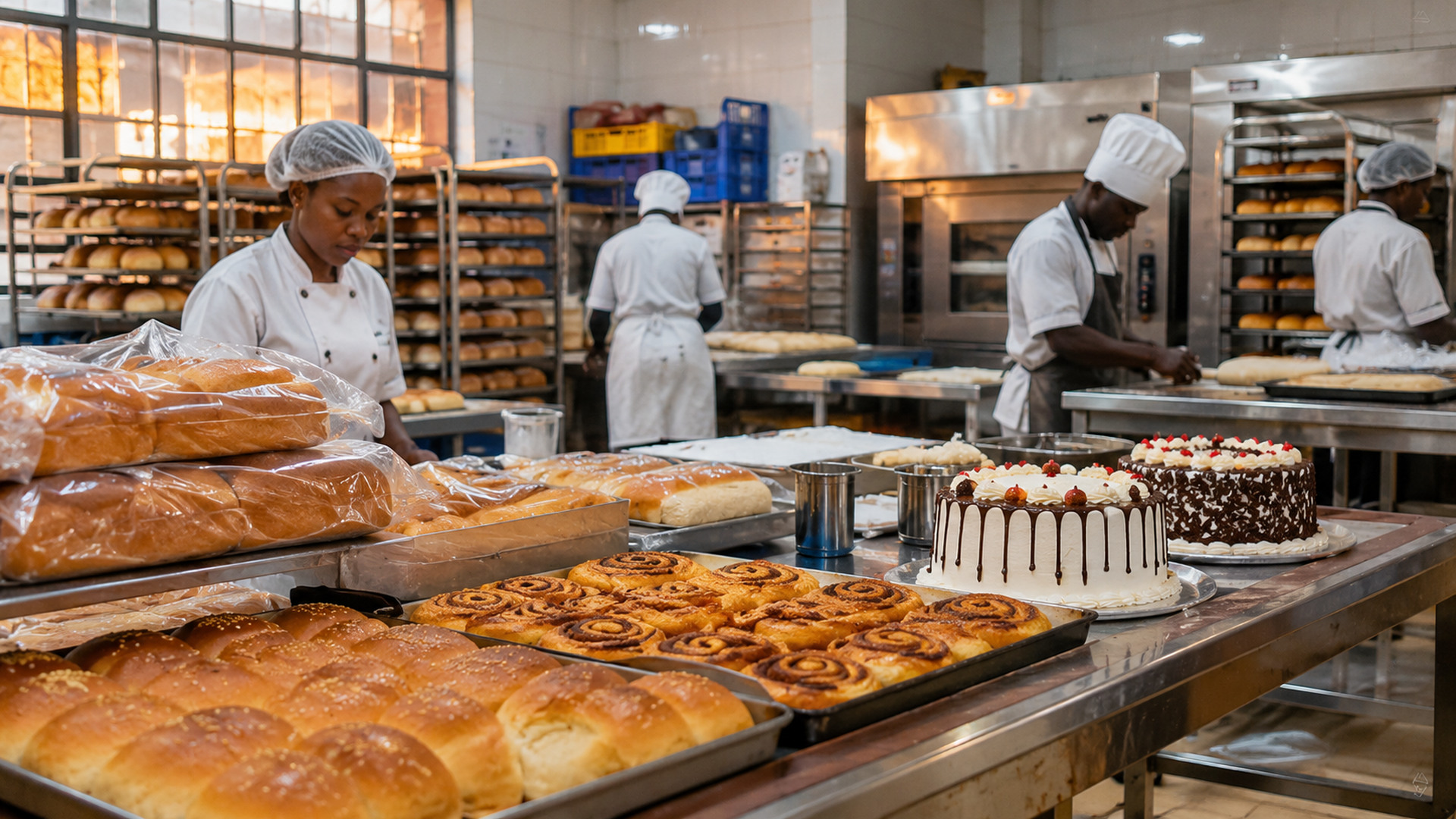
Bakery staff preparing and packaging products for bakery in Kenya
Start with a physical count and enter opening quantities. Keep raw materials separate from finished products, packaging, cleaning supplies and expensive baking equipment. A mixer is a fixed asset rather than flour inventory; replacing a broken mixer should not be mistaken for ordinary ingredient consumption. The distinction helps our accounting team classify purchases and prepares the owner to compare the production log with the supplier ledger. Review high-value ingredients weekly and slower-moving items according to risk. For bakery inventory management in Kenya, a clear starting record is more useful than an elaborate spreadsheet nobody updates.
Check 1: Link planned batches to expected demand
A Wednesday bread run might be smaller than a Saturday run, while cake demand may rise before holidays. Ask production staff to estimate output from confirmed orders, last week’s sales, likely walk-in traffic and current finished stock. Keep the estimate distinct from a guaranteed sale. The owner should agree on a production quantity, the recipe quantities and the number of trays expected to come out of the oven. Bakery inventory management in Kenya improves when planning decisions leave a record that can be compared with what actually happened.
At UngaRise, the manager writes down planned batches before staff issue flour and other inputs. During the day, the supervisor records a shortened batch, a failed bake or an urgent extra order. At closing, the counter team reports items sold, transferred, given as approved samples or discarded. For bakery inventory management in Kenya, a production variance then has an explanation, rather than becoming an unexplained stock adjustment. FedhaTrac can help organize purchasing and financial records, while the bakery’s own team remains responsible for food handling, recipes and the physical production count.
Check 2: Approve ingredient purchases before the supplier arrives
An informal instruction such as “bring more sugar tomorrow” creates room for pricing disputes and duplicate orders. Use a purchase request showing the stock on hand, quantity required, supplier quotation, delivery date and person authorizing the purchase. The FedhaTrac inventory workspace shown in your earlier screenshots includes Products & Stock, Purchase Orders and Suppliers sections. That supports a useful administrative sequence, but it is not evidence that an automated approval engine or supplier ordering integration is enabled for every account. Bakery inventory management in Kenya still needs a human review of each proposal.

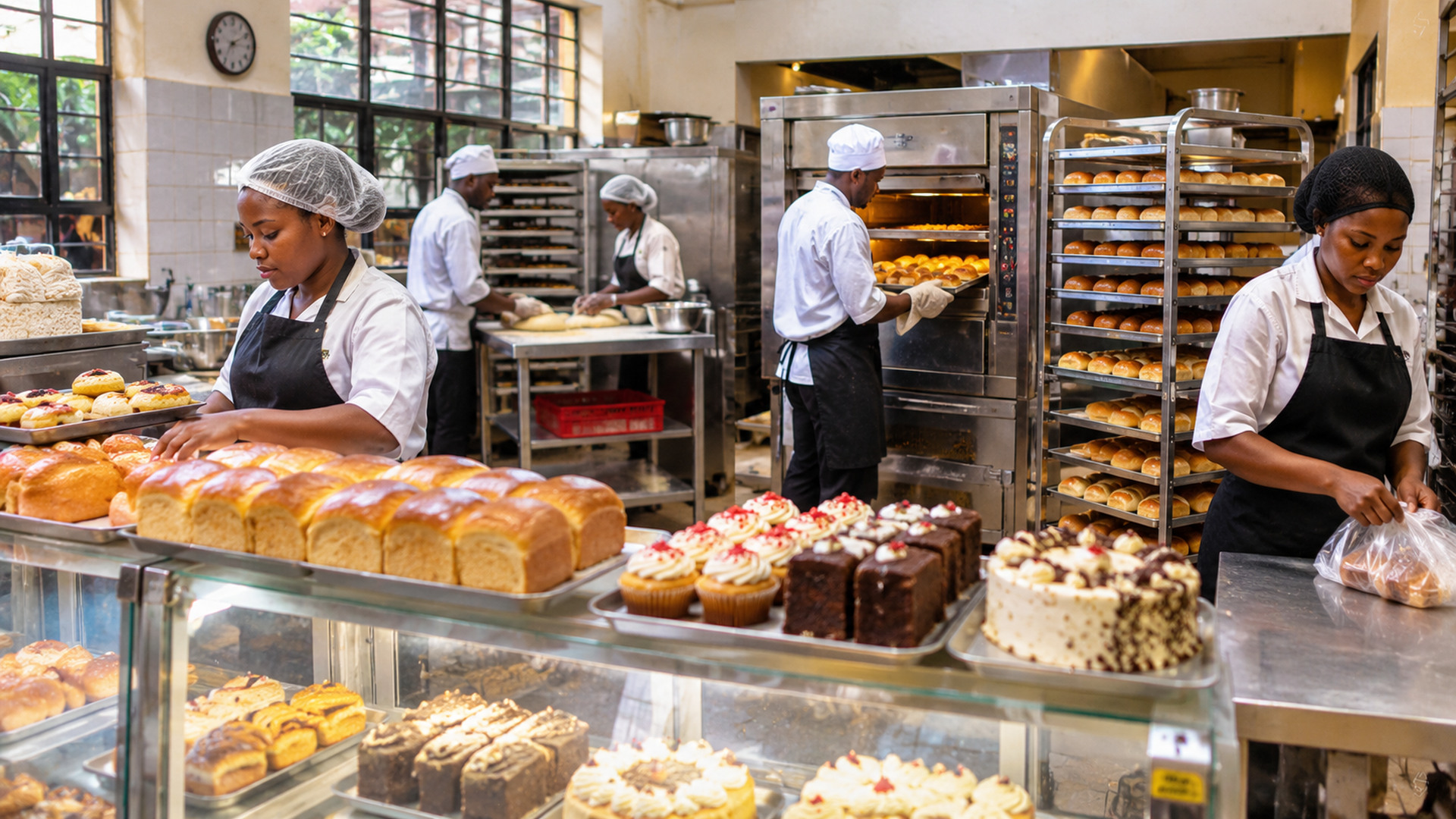
Bakers checking daily production and stock for bakery in Kenya
In bakery inventory management in Kenya, a useful purchasing decision compares unit costs on the same basis. If Supplier A sells a 50-kilogram bag and Supplier B quotes ten smaller packets, compare cost per kilogram and delivery conditions. Confirm expiry or best-before dates where relevant, packaging condition and any returns agreement. Separate urgent purchases from planned replenishment so owners can see which ingredients repeatedly cause emergency trips. Our business operations service can help keep supplier details, invoices and approved spending documentation organized for those conversations.
Check 3: Receive goods against the order and invoice
For bakery inventory management in Kenya, a purchase order says what the bakery authorized; a delivery note shows what arrived; and the supplier invoice states what is being charged. Those are three different records. Someone should inspect quantities, packaging, obvious damage and relevant dates before accepting stock, then document any short delivery or rejection. For perishable goods, do not wait until the monthly financial review to discover a problem. Bakery inventory management in Kenya becomes dependable when receiving checks happen before stock is released to production.
Suppose the bakery ordered 20 bags of flour but received 19. The receiving record should show 19 accepted, one outstanding and the supplier’s response. Paying for the full order without reconciling the shortage creates a false stock balance and a possible overpayment. If substitutes are accepted, identify them by actual product and price. The kitchen can then confirm that the replacement is technically suitable. FedhaTrac can assist with purchase records and payables; the bakery must make the operational and food-safety judgment itself.
Check 4: Treat stock movements as evidence, not guesses
Stock decreases when an ingredient is consumed in an approved batch, transferred to another branch, returned to a supplier, spoiled or otherwise adjusted. These events should not be combined under “used.” Keep a basic movement record with date, item, quantity, batch or job reference and authorizing employee. Bakery inventory management in Kenya is clearer when managers can explain why recorded flour consumption exceeds recipe expectations. If a flour bag is opened for two batches, the record may use a measured quantity rather than assuming the whole bag disappeared.

Production and sales activity during a bakery shift for bakery in Kenya
Recipe standards for bakery inventory management in Kenya are helpful but never absolute. Different dough moisture, handling losses and product sizes can alter actual consumption. Record material variances and investigate persistent patterns without automatically accusing employees. Where a production worksheet identifies a legitimate loss, maintain it beside the inventory adjustment. Our role at FedhaTrac is to help the financial records remain traceable and to report the resulting cost movement, not to certify an oven’s performance or a bakery’s yield. Staff training and practical measurement discipline make the records useful.
Check 5: Separate finished-bread waste from raw-material waste
Unsold bread at closing is different from spoiled raw eggs or dough discarded before baking. Each loss affects a different point in the process and calls for a different response. Unsold loaves might indicate excess production or weak pricing. Damaged flour could indicate poor receiving or storage. Burned trays may signal equipment or training issues. Bakery inventory management in Kenya should show those patterns separately so management does not react to every problem by cutting the purchasing budget.
A daily waste log for bakery inventory management in Kenya can record product, quantity, reason, date and supervisor. Review high-frequency losses in a short weekly meeting. If staff food, charitable donations or promotional samples are authorized, identify them rather than silently labeling them theft or retail sales. At month-end, the accountant decides how properly supported losses affect cost of sales or other expenses under the adopted accounting policy. Do not assume all waste can be deducted for tax simply because it was written in a notebook; KRA documentation requirements still matter.
Check 6: Compare supplier bills with payment dates
A bakery may receive ingredients in November but pay the supplier in December. The cost and the cash movement belong to related yet distinct records. Keep invoices, delivery evidence, agreed credit terms, due dates, credits and the amount paid. Bakery inventory management in Kenya does not stop at physical quantity: it should inform how much cash the owner will need when multiple suppliers come due. A large stockroom may also mean money is tied up in materials that will not be consumed soon.

Bakery manager reviewing ingredient ordering for bakery in Kenya
Bakery inventory management in Kenya also needs a supplier-aging report: current, approaching due, overdue and disputed. A disputed amount is not permission to ignore the entire invoice; document the dispute and resolve it with the supplier. Under an agreed service scope, FedhaTrac helps businesses maintain purchase records, payment tracking and cash-flow reporting. That is different from guaranteeing credit approval or paying a supplier on the owner’s behalf without authorization.
Check 7: Make finished-goods counts agree with sales records
Sales records for bakery inventory management in Kenya should distinguish counter sales, advance cake orders, wholesale deliveries, staff-authorized complimentary items and returns. A cake ordered with a deposit is not the same as a cake delivered and fully paid. The checkout system can record products, receipts, customers and payment options, while the bakery still has to compare actual physical goods with those entries. Bakery inventory management in Kenya is stronger when finished goods have a daily opening count, production additions, sales reductions and closing count.
If the counter sold 180 rolls but the production sheet says 220 were delivered and only 20 remain, the 20-roll difference needs investigation. It might be a transfer, an unrecorded discount promotion, damaged goods or a transaction error. Do not plug the discrepancy with a convenient “stock correction” before reviewing evidence. FedhaTrac’s visible POS and inventory modules can support records; they are not proof that recipe-level inventory automatically deducts every ingredient after a sale.
Check 8: Review margins without confusing profit and cash
For UngaRise’s illustrative month, assume KSh 1,150,000 in earned sales, KSh 755,000 in cost of goods sold and KSh 260,000 in operating expenses. Gross profit is KSh 395,000 and operating profit is KSh 135,000. That is an operating margin of about 11.7%, before financing costs and income tax. Separately, raw-material stock can reconcile from KSh 180,000 opening plus KSh 620,000 purchases less KSh 580,000 issued to production, leaving KSh 220,000 on hand. These are related but not identical calculations because ingredient consumption is not the whole finished-goods cost. Bakery inventory management in Kenya helps explain both.

Supplier and business records at a bakery for bakery in Kenya
A bakery can be profitable yet short of funds if wholesale customers delay paying or suppliers demand deposits. Our specialised reporting and advisory can help managers read profit, supplier commitments and liquidity together. We recommend using a separate cash forecast before purchasing a second oven or signing a larger distribution agreement. The financial example is deliberately simplified; actual operations require accurate opening balances, product mixes, payroll classification, stock valuation and supported adjustments.
Check 9: Keep food hygiene duties distinct from financial software
A clean stock ledger does not prove a bakery is safe to operate. Kenya’s Ministry of Health publishes a food-hygiene licensing checklist, and the relevant county and public-health authorities determine the applicable operating permissions and inspections. Bakery inventory management in Kenya should support traceable purchasing, but food safety also depends on storage temperatures, cleanliness, food handlers, pest control and documented procedures. A financier’s report is not a public-health certificate.
On the financial side, KRA’s eTIMS guidance explains applicable electronic invoicing obligations for persons doing business, including non-VAT-registered traders. Issuing a receipt at a cash register is not by itself proof that a compliant electronic tax invoice was transmitted. FedhaTrac offers tax-compliance assistance and bookkeeping support, but does not claim that every inventory or POS entry automatically files with KRA. Staff should preserve proper invoices, confirm their tax status and raise unclear issues with an appropriate adviser.
Check 10: Review purchasing decisions with the people who bake
The accounts officer may spot rising butter costs while bakers know that a recipe has been changed. A stock report alone cannot reconcile those viewpoints. Schedule a brief weekly review with the production supervisor, sales lead and owner. Bakery inventory management in Kenya improves when the conversation covers what was planned, what was baked, what sold, what spoiled, which purchases were rushed and which suppliers disappointed. Close each meeting with named actions and dates rather than ten screenshots nobody interprets.
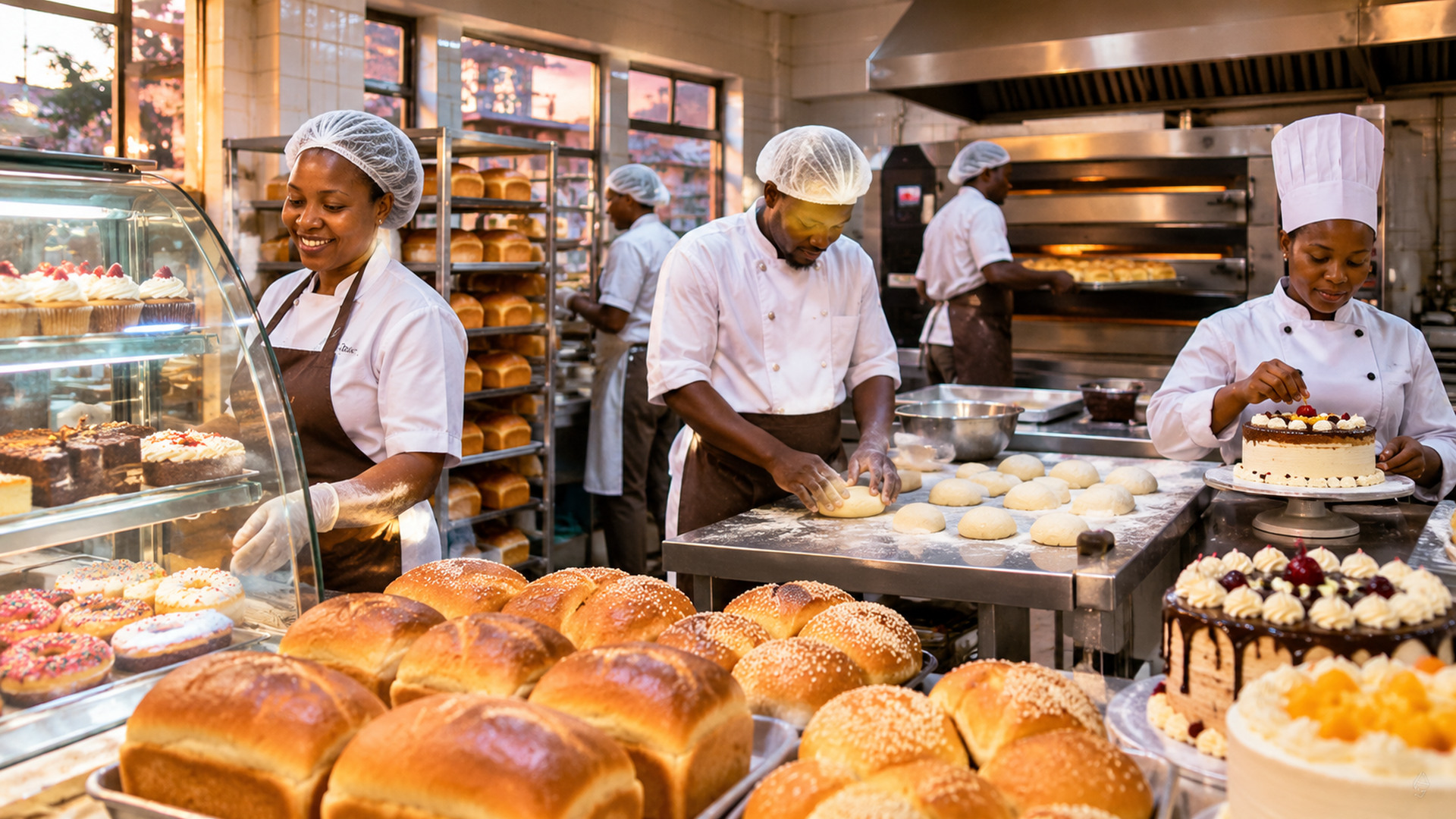
Bakery team discussing operating improvements for bakery in Kenya
Ask whether certain cake sizes produce weak contribution after packaging and decoration time. Ask whether price discounts create extra demand or simply move sales forward. Ask whether reliable corporate customers need a different ordering cutoff from walk-ins. These questions connect product planning with management reporting. Our team can build useful cost summaries and review account reconciliations; bakery management retains control of recipes, staffing, production schedules and prices.
Check 11: Keep records ready for next month’s decisions
At close, retain the approved purchase orders, goods-received notes, supplier invoices, batch logs, stock counts, waste authorizations, sales summaries and payment statements. Label the month complete only after discrepancies have owners and explanations. Bakery inventory management in Kenya requires continuity: tomorrow’s opening count is today’s verified closing count. A late adjustment should be traceable to its source, not buried by rewriting last month’s figures silently.
FedhaTrac can help prepare management statements showing inventory value, purchasing trends, supplier balances, sales, cost of goods sold and cash needs. It can also support audit preparation with reconciled records and schedules, without representing itself as an independent auditor. Start with the largest recurring losses and improve the process gradually.
Frequently asked questions about bakery stock
Can a small bakery use these checks without expensive equipment?
Yes. Start with one consistent item list, signed receiving notes, an understandable batch sheet and a dependable daily sales summary. Bakery inventory management in Kenya does not require a custom enterprise system before good counting habits begin. Once the records are reliable, discuss which FedhaTrac workspaces and accounting services fit the bakery’s transaction volume. Human checks still matter when records are entered manually.
Does FedhaTrac automatically deduct flour whenever bread is sold?
That automation is not verified from the supplied product screenshots. We can discuss the visible inventory, purchasing, POS and accounting functions, but we should not promise a recipe-engine integration without testing it. Bakery inventory management in Kenya can still be supported by approved production logs and reconciled stock adjustments.
Can I treat all spoiled ingredients as tax-deductible losses?
Not automatically. The accounting and tax treatment depends on the evidence, circumstances, applicable law and the business’s tax position. Keep documented authorizations, stock movement records and supporting invoices, then review the issue with FedhaTrac’s tax-compliance team. A waste entry is a starting record, not a blanket tax ruling.
How often should I review ingredients and finished stock?
Count high-risk and fast-moving items frequently, compare daily finished goods with sales and conduct a controlled periodic full count. Bakery inventory management in Kenya works best when frequency follows loss risk and operational practicality rather than a rigid schedule copied from another business. Resolve significant differences before planning a large reorder.
What is the quickest way to engage FedhaTrac?
Prepare your current supplier list, recent invoices, stock sheet and a sample sales summary. Contact us through FedhaTrac and explain your bakery’s branches, buying cycle, products and reporting concerns. We can agree on a practical scope for records, purchasing, financial reports and tax support rather than selling a capability you do not need.
Give every ingredient a clear financial purpose
A successful bakery is not simply one that sells more bread. It is one that knows what went into each production day, how much was lost, what remains to sell, and when suppliers must be paid. At FedhaTrac, we help turn those facts into controlled purchasing, organized financial evidence and management insight. Bakery inventory management in Kenya becomes a source of stronger margins when the people who buy, bake, count and review share accurate records. Contact our team to develop a buying and reporting routine that fits your bakery, not an imaginary perfect operation.


